
Outdoor parties live and die by lighting. When the sun dips below the horizon, mediocre backyards suddenly feel unsafe and uninviting, while thoughtfully lit spaces transform into destinations. Good outdoor party lighting doesn’t just illuminate, it sets mood, defines circulation paths, and creates zones that encourage guests to linger. Whether hosting a casual weeknight dinner or a full-scale celebration, the right lighting strategy turns an ordinary yard into an experience. This guide walks through the essentials: what types of lights work best, how to lay them out effectively, and how to do it without emptying your wallet.
Table of Contents
ToggleKey Takeaways
- Outdoor party lighting is essential for safety and atmosphere—it shapes how guests move through your space and sets the overall mood of your gathering.
- Layer three types of lights strategically: overhead string lights for ambient coverage, pathway lights for safe navigation, and lanterns or accent lights for depth and visual interest.
- Warm white lights (2700K) flatter skin tones and create an inviting atmosphere, making them the ideal choice for outdoor party settings over cooler color temperatures.
- Map your yard into zones (dining, lounge, and walkways) and test your lighting layout at dusk before guests arrive to adjust brightness and positioning.
- Start with an affordable outdoor party lighting setup under $150 using solar string lights, pathway lights, and LED tea lights, then upgrade incrementally as needed.
Why Outdoor Party Lighting Matters for Your Next Gathering
Outdoor party lighting does more than let people see. It shapes how guests move through your space, where they congregate, and how long they stay. Poor lighting creates safety hazards, guests stumble on unseen steps, trip over deck edges, or feel uneasy in dark corners. Beyond safety, lighting sets atmosphere. Warm, layered light feels intimate and welcoming: harsh, flat light feels institutional and cold.
Professional event planners spend 30–40% of their lighting budget on outdoor spaces because they know the ROI is real. Guests feel comfortable, circulate naturally between seating and food areas, and remember the experience fondly. For a DIYer, that same principle applies: strategic lighting transforms a backyard from a dark void into a usable, memorable extension of your home. You don’t need expensive equipment, just a clear strategy.
Essential Types of Outdoor Party Lighting
Different light types serve different purposes. Understanding what each does lets you layer them effectively for depth and mood.
String Lights and Bistro Lights
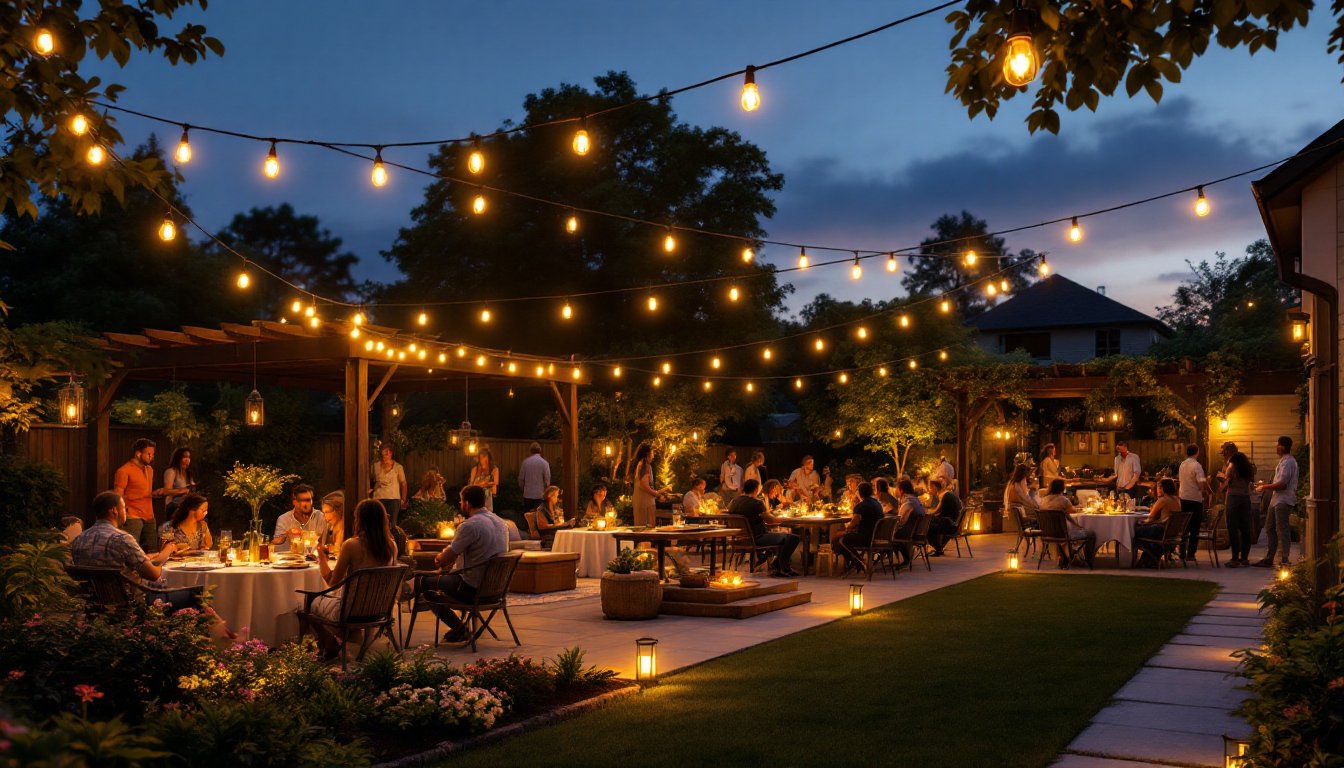
String lights and bistro lights are the workhorses of outdoor party lighting. String lights, thin cables strung overhead with small bulbs spaced 12–24 inches apart, create canopy-like coverage and distribute light across an entire seating area. Bistro lights (also called café lights or Edison strings) feature larger vintage-style bulbs that deliver warmer color temperature and create more pronounced pools of light. Both come in solar, battery-powered, or plug-in versions.
Plug-in options deliver consistent brightness and never require charging: they’re best for patios connected to an outdoor outlet or a weatherproof extension cord. Solar and battery versions offer flexibility for decks and yards far from power, but brightness drops in cloudy regions and after several hours of use. Warm white (2700K color temperature) mimics incandescent warmth and flatters skin tones, cool white (4000K+) feels institutional. For parties, warm white wins every time.
Key consideration: string lights work best overhead or as a perimeter frame. Laying them flat on a table or fence rarely achieves the visual impact of hanging them at 8–10 feet above seating areas.
Lanterns and Pathway Lights
Lanterns add vertical dimension and ground-level ambiance. Tabletop lanterns with candles or flameless LED bulbs create intimate focal points and occupy horizontal space without overhead clutter. Hanging lanterns suspended from pergolas, shepherd’s hooks, or tree branches multiply focal points and draw the eye upward.
Pathway lights (small stake lights along garden beds or walkways) prevent trips and define movement zones. They don’t require overhead wiring and work well with solar options since they operate at low voltage. Pair pathway lights with string lights overhead: pathways guide guests safely, while overhead lights illuminate gathering zones.
Mix light types strategically. Overhead strings provide ambient light: lanterns add character: pathway lights ensure safe navigation. Avoid flooding everything with one type, layers create depth and visual interest.
How to Design a Lighting Layout That Works
Start by mapping zones. Identify where guests will eat (dining table or food station), lounge (seating area, fire pit), and move through (walkways, stairs, deck edges). Sketch your yard to scale on paper, this takes 10 minutes and prevents costly mistakes.
Step-by-step layout process:
- Determine focal points. Place the brightest lights above dining and lounge areas. These anchor the party and signal where people should gather.
- Add ambient overhead light. String lights stretched 6–10 feet above seating create a sense of enclosure and distribute light evenly. Avoid leaving large dark pockets.
- Define edges and pathways. Mark deck edges, steps, and routes to restrooms or the house with pathway lights or lanterns every 4–6 feet.
- Layer in accent lights. Uplighting trees, spotlighting architectural features (a pergola, fence), or placing candles on tables add depth and prevent the space from feeling flat.
- Test at dusk. Set up and power on lights 30 minutes before sunset to see how they look as natural light fades. Adjust brightness or positioning before guests arrive.
Common layout mistakes:
Running lights on a single circuit without dimming creates all-or-nothing brightness, bright enough to work by, but harsh for conversation. Use multiple circuits or dimmable plugs if possible. Bunching lights in one area leaves other zones dark, making guests hesitant to explore. Spacing lights evenly across the yard (even if you add more lights later) creates balanced coverage. Ignoring sightlines: overhead lights strung above eye level should not shine directly into guests’ eyes when they’re seated, adjust height or angle slightly forward.
Width and depth matter too. In a narrow yard, run lights parallel to the long axis to make it feel wider. In a deep yard, use staggered rows to draw people farther back.
Budget-Friendly Lighting Solutions
Quality outdoor party lighting doesn’t require a big budget if you prioritize strategically.
Affordable starting point (under $150):
A single string of 25–50 warm-white solar or plug-in lights ($30–60), a pack of 6–10 solar pathway lights ($20–40), and a box of flameless tea lights for tables ($15–30) create respectable baseline ambiance. Position the string overhead in your main gathering zone, stake pathway lights along walkways, and scatter tea lights on tables. This covers the essentials without complexity.
Mid-range setup ($150–400):
Add a second string light run perpendicular to the first for grid coverage, upgrade to a plug-in string with brighter Edison bulbs, and include a few hanging lanterns on adjustable hooks. Plug-in strings (especially those on dimmable switches or smart plugs) outperform solar in reliability and brightness, and the initial cost difference is modest.
Material-specific cost insights:
Solar lights are cheapest upfront but least reliable in cloudy climates or after 8+ hours of operation. Battery-powered lights (AA or rechargeable packs) cost slightly more but last longer per charge. Plug-in lights ($40–100 per 50-light string) deliver maximum brightness and no charging hassle, but require an outdoor outlet or heavy-duty extension cord (rated for wet locations, critical safety detail). Extension cords for outdoor use cost $15–30 but are non-negotiable.
Money-saving tips:
Buy lights in off-season (July–August for next year) or post-holiday sales (January). Reuse candles from interior décor on tables instead of buying party-specific versions. DIY a shepherd’s hook from rebar and a curved pipe fitting ($10–15 in hardware store materials) instead of buying decorative hooks ($30+). Mix string lights with strategically placed lanterns rather than stringing your entire yard, fewer lights, more impact.
Conclusion
Outdoor party lighting transforms a dark backyard into an inviting, safe gathering space. By layering string lights, lanterns, and pathway lights strategically, any homeowner can create an atmosphere that extends entertaining into the evening. Start with essentials, overhead ambient light and ground-level navigation, then add character with accent lights and focal pieces. The key is intentional placement, not quantity. Test layouts at dusk, prioritize warm color temperatures, and invest in plug-in lights if an outlet is accessible. With a modest budget and clear vision, your next backyard party will be remembered for its atmosphere, not its darkness.