
Commercial under cabinet lighting has evolved significantly from the dim, bulky fluorescent strips of the past. Today, modern electric under cabinet systems deliver bright, efficient illumination that improves both functionality and aesthetics in kitchens, bars, retail displays, and workspaces. Whether upgrading an existing facility or designing a new one, choosing the right under cabinet lighting solution requires understanding the available technologies, installation requirements, and performance specifications. This guide walks through the key considerations for selecting and installing commercial electric under cabinet lighting that meets current building codes, energy standards, and operational demands.
Table of Contents
ToggleKey Takeaways
- LED under cabinet lighting is the commercial standard, consuming 75–80% less energy than fluorescent fixtures while delivering superior light quality and 50,000+ hour lifespans.
- Commercial electric under cabinet systems must meet IES recommendations of 500–750 lux for food prep areas to eliminate shadows, reduce worker fatigue, and ensure compliance with health and safety codes.
- When selecting commercial under cabinet lighting, prioritize CRI 90+ color rendering, 4000K neutral white color temperature for kitchens, and IP54 moisture-resistant ratings to guarantee durability in demanding environments.
- Proper spacing of 16–24 inches between fixtures ensures even illumination across work surfaces without dark spots, while low-voltage DC systems (24V or 12V) offer safer installation in food service areas.
- LED fixtures require minimal maintenance—no bulb replacement needed—but should be cleaned quarterly and have connections checked annually, especially in humid commercial kitchens.
- Installation of commercial electric under cabinet lighting requires a licensed electrician for circuit sizing, transformer specification, and NEC code compliance to ensure long-term reliability and safety.
Why Under Cabinet Lighting Matters for Commercial Spaces
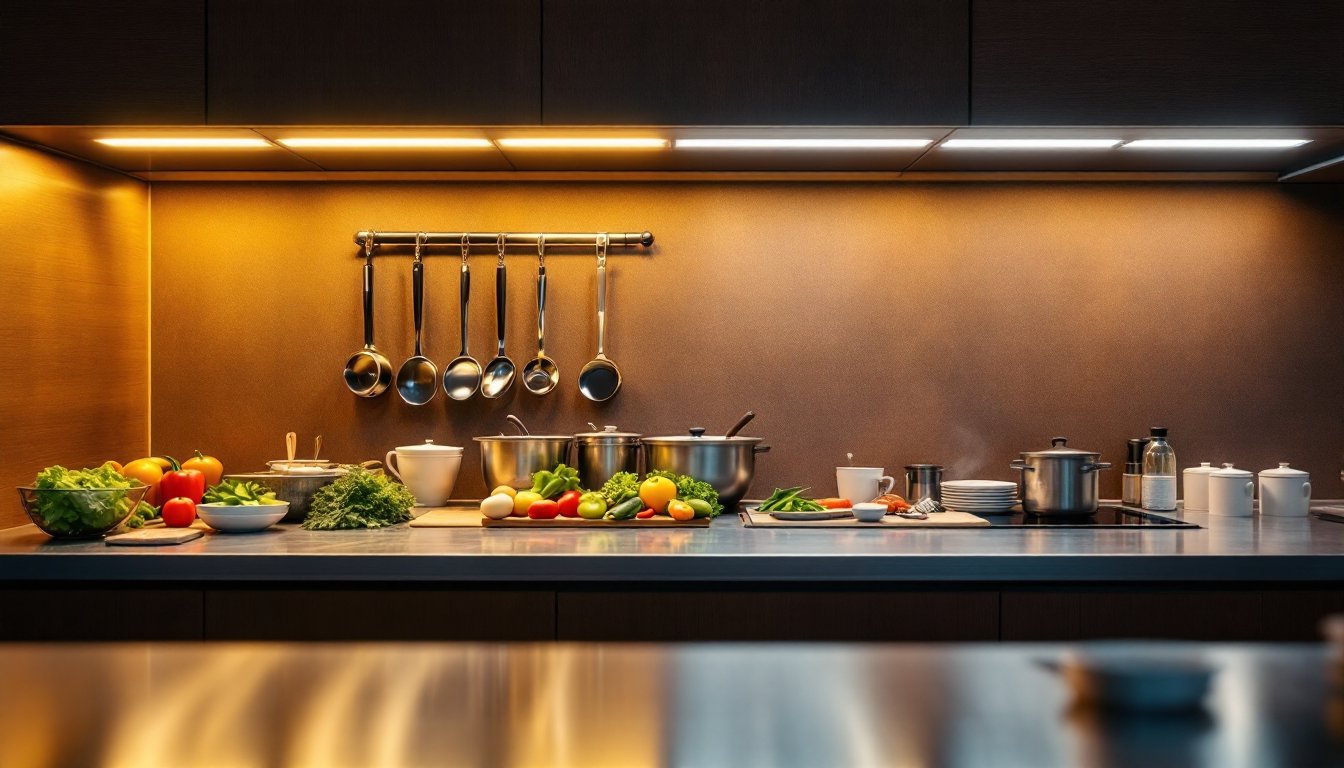
Under cabinet lighting isn’t just a finishing touch, it’s a practical system that directly impacts workflow, safety, and visual appeal. In commercial kitchens, proper under cabinet illumination eliminates shadows on countertops where prep work happens, reducing fatigue and cut risks. Retail environments use under cabinet lights to highlight merchandise, creating visual depth and drawing customer attention to featured products.
Beyond functionality, commercial spaces depend on lighting quality to meet health and safety codes. The Illuminating Engineering Society (IES) recommends 500–750 lux (roughly 50–75 foot-candles) for food prep areas and 300–500 lux for general retail display work. Inadequate lighting invites safety violations, worker errors, and customer dissatisfaction. Commercial electric under cabinet systems also contribute to brand consistency, uniform, reliable lighting across multiple locations signals professionalism and operational excellence.
Types of Commercial Electric Under Cabinet Lighting Systems
LED Under Cabinet Lights
LED under cabinet lights dominate the commercial market and are the standard choice for most new installations. They consume 75–80% less energy than traditional fluorescent fixtures while delivering superior light quality and longer lifespans (typically 50,000 hours or more). Modern LED options include dimmable and tunable-white models, allowing operators to adjust color temperature and brightness without replacing fixtures.
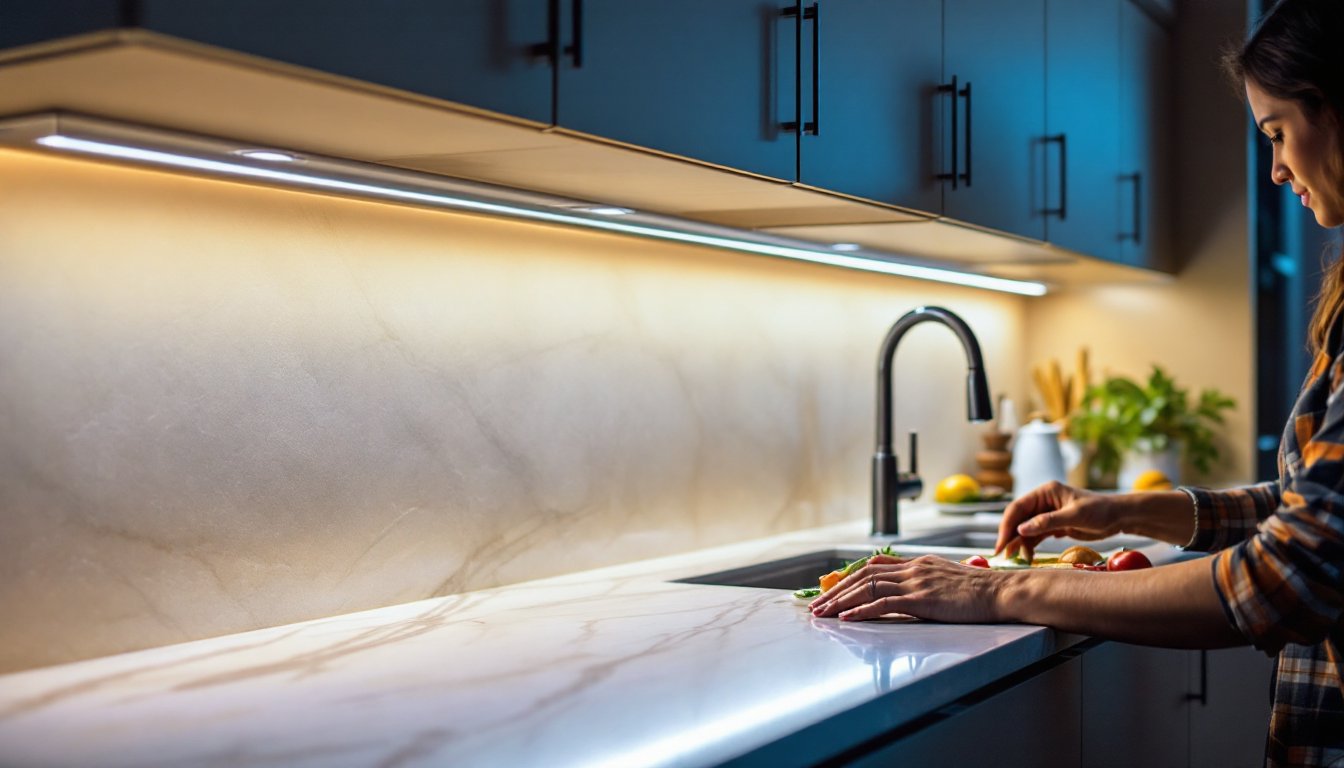
LED fixtures come in two primary configurations: integrated ribbon lights (continuous LED strips mounted directly to cabinet undersides) and modular bar lights (discrete fixtures spaced evenly). Ribbon lights suit continuous work surfaces: bar lights offer better heat dissipation and are simpler to replace individual units. Most commercial-grade LED units operate on low-voltage DC (24V or 12V) circuits, requiring a transformer and appropriate wiring. This is safer for commercial food prep areas and easier to install in older buildings without extensive electrical work.
Fluorescent and Halogen Options
Traditional T8 or T5 fluorescent under cabinet fixtures are still found in many facilities and remain cost-effective for retrofit installations. They’re rugged, reliable, and cheaper upfront than LED. But, fluorescent technology generates more heat, consumes more energy, and produces flicker in standard (non-ballast-regulated) configurations. Most commercial codes now discourage new fluorescent under cabinet installations in food service areas due to mercury content and disposal regulations.
Halogen under cabinet lights provide bright, white light and are common in retail displays and jewelry showcases where high color rendering is critical. They run hot, demand dimmable fixtures (to avoid premature burnout), and consume significant power. Halogen isn’t practical for continuous operation in commercial kitchens and has largely been replaced by LED in new builds. Both fluorescent and halogen fixtures require more frequent maintenance and higher energy costs than LED alternatives.
Key Features to Look For
When specifying commercial electric under cabinet lighting, prioritize color rendering index (CRI) and correlated color temperature (CCT). LED fixtures with CRI 90+ are essential for food prep and retail environments where accurate color perception matters. A CCT of 4000K (neutral white) suits most commercial kitchens: 3000K (warm white) works for dining or hospitality spaces. Confirm the fixture’s lumen output and lux distribution, a 24-inch bar light typically delivers 800–1200 lumens and should light a 12–18 inch work area evenly without dark spots.
Dimmability is increasingly expected in commercial spaces. LED fixtures with 0–10V dimming control or PWM (pulse-width modulation) dimming integrate with building automation systems. This allows staff to adjust lighting without replacing bulbs and supports energy management protocols.
Durable aluminum housing with silicone gaskets resists moisture and spills common in food service. Fixtures rated IP54 or higher (dust and splash-resistant) meet commercial kitchen standards. Ensure wiring is rated for wet locations if the light sits above prep areas or dishwashing stations.
Spacing and mounting matter too. Most commercial under cabinet lights mount flush to the underside of cabinets using clips or adhesive backing. Space fixtures 16–24 inches apart for even illumination: closer spacing suits narrow work surfaces. Confirm the fixture depth doesn’t interfere with door clearance or workspace height, most commercial-grade fixtures measure 1–2 inches thick.
Installation and Maintenance Considerations
Commercial under cabinet lighting installation complexity depends on whether the facility has existing electrical infrastructure. If upgrading existing fluorescent fixtures, new LED bar lights may drop directly into place, reusing existing conduit and junction boxes, a 2–3 hour per zone retrofit. If installing new circuits, work typically requires a licensed electrician to run conduit, size the transformer (if low-voltage), and ensure compliance with local National Electrical Code (NEC) requirements.
Surface preparation is crucial. Cabinets must be clean, dry, and free of grease before mounting. In commercial kitchens, a light degreaser and alcohol wipe prevent adhesive-backed lights from sliding. If using mechanical clips, mark cabinet underside with a level: crooked lights create visual distractions and uneven work surface illumination.
Electrical considerations: Low-voltage LED systems require a step-down transformer sized to the total wattage. A 120-watt fixture load needs at least a 150–200W transformer: oversizing slightly improves efficiency. Transformer placement should be accessible for maintenance and away from moisture-prone areas. Run 18 AWG wire for 12V circuits and 16 AWG for 24V circuits in conduit to protect against accidental damage.
Maintenance is minimal with LED. Unlike fluorescent units, LEDs don’t need regular bulb replacement. Clean fixture covers quarterly with a damp cloth to remove dust buildup, which reduces brightness. Check connections annually, especially in commercial kitchens where humidity and heat cycling can loosen connections. Most commercial LED fixtures carry 3–5 year warranties: keep documentation for compliance audits.
Conclusion
Commercial electric under cabinet lighting is no longer a luxury feature, it’s a core operational investment. LED technology offers the best balance of energy efficiency, light quality, and durability for food service, retail, and hospitality spaces. When selecting fixtures, prioritize CRI 90+, appropriate lumen output for your work surface, and IP54 moisture rating to ensure the system meets commercial standards and lasts a decade or more. Proper installation and routine maintenance keep these lights performing reliably and supporting safe, efficient workflows. Consult a licensed electrician for circuit sizing and code compliance specific to your jurisdiction.