
Floor lighting is one of the easiest and most effective ways to upgrade a living room without major renovation. Whether someone’s looking to brighten a dim corner, create a focused reading nook, or add ambient warmth to the entire space, floor lighting delivers versatility that other fixtures struggle to match. Unlike recessed ceiling lights or wall sconces, floor lamps and uplights sit exactly where needed, cast light in flexible directions, and rarely require wiring, making them ideal for renters and homeowners alike. In 2026, floor lighting options range from sleek minimalist designs to industrial fixtures, with smart bulbs and energy-efficient LEDs making them practical for any budget. This guide walks through what works, how to choose wisely, and where to position lights for maximum impact.
Table of Contents
ToggleKey Takeaways
- Floor lighting for living rooms solves uneven illumination and shadows that ceiling fixtures alone cannot address, offering flexible placement without requiring permanent wiring.
- LED bulbs are the best choice for floor lighting, providing instant-on capability, dimmable options, long lifespan (25,000+ hours), and color temperature flexibility from warm 2700K to daylight 5000K.
- Position reading lamps at a 15-20 degree angle to the side of seating to eliminate glare, while uplights should be placed in corners to bounce light off ceilings or textured walls for ambient effect.
- Warm-toned bulbs (2700K) create cozy atmospheres that encourage relaxation, while cooler tones (4000K+) suit task-focused areas like reading nooks.
- Prioritize lamp base stability by choosing designs that are at least one-third the width of their height, especially in homes with children or pets.
- Use cord management strategies like adhesive clips or conduit along baseboards to eliminate tripping hazards and maintain a clean appearance.
Why Floor Lighting Matters in Your Living Room
Floor lighting solves a fundamental problem in most living rooms: uneven, insufficient light. Ceiling fixtures alone often create harsh shadows or fail to reach corners where people actually sit. Floor lamps fill those gaps without being hardwired, giving the homeowner complete control over brightness and placement.
Good floor lighting also shapes the mood of a space. Warm-toned bulbs (2700K color temperature) create an inviting, cozy atmosphere that encourages relaxation, while cooler tones (4000K+) suit task-focused areas like reading corners. This flexibility is why designers and DIYers alike reach for floor lighting as a starting point.
Safety matters too. A dark corner is a tripping hazard: proper lighting prevents accidents. Floor lamps placed strategically illuminate pathways, stairs, and obstacles that could cause injury, especially for older adults or households with children.
Finally, floor lighting is reversible. Unlike built-in fixtures, a floor lamp can move from room to room or be swapped out entirely. This flexibility reduces the commitment, making it easier to experiment with different styles and brightness levels before investing in permanent solutions.
Types of Floor Lighting Options
Standing Floor Lamps
Traditional standing floor lamps remain the most common choice for living rooms. They typically stand 60 to 72 inches tall with a lampshade that directs light downward and outward. Tripod designs offer stability and a modern aesthetic, while tower lamps with multiple bulbs provide brighter overall illumination in tighter footprints.
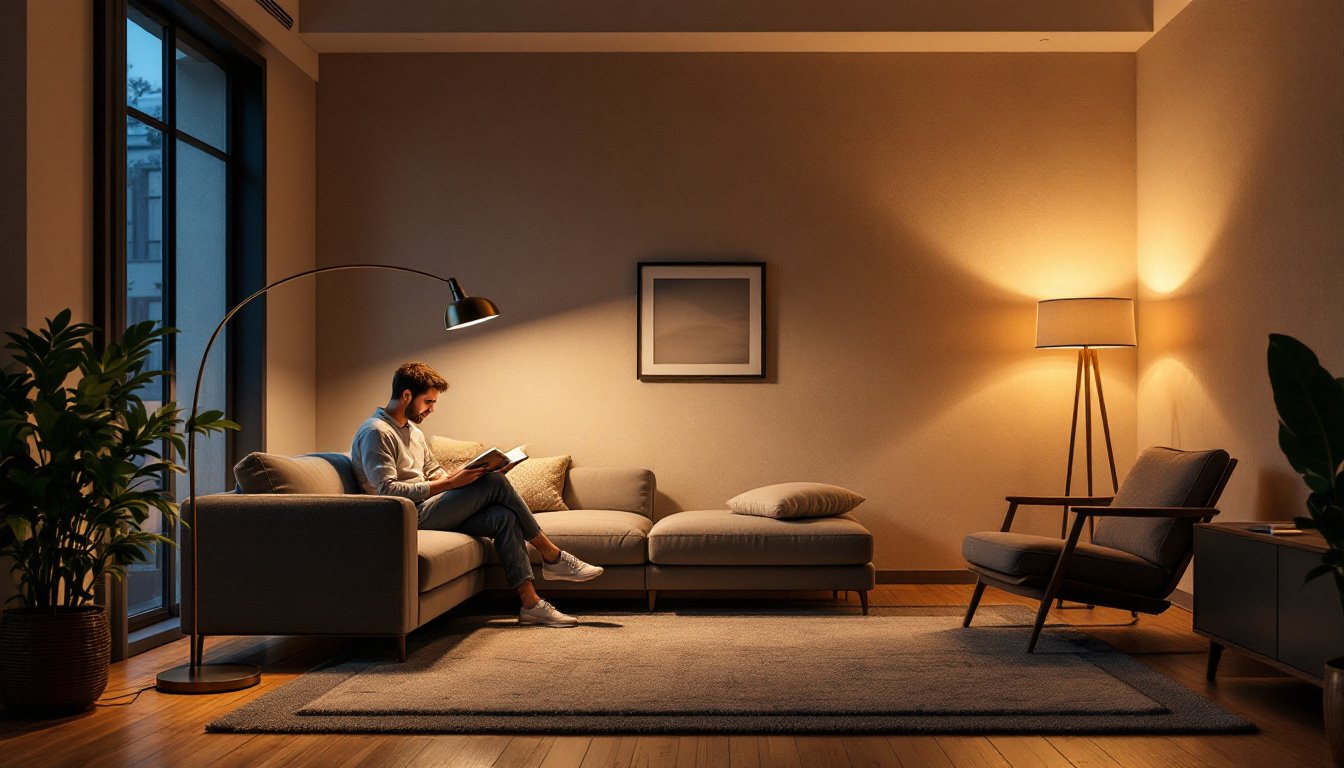
Arc lamps bend overhead to reach across seating areas without occupying floor space directly beside furniture. They’re excellent for illuminating a sofa’s reading zone from above. The downside: arc lamps require careful balancing and more maintenance since the weighted base must stay stable.
Adjustable swing-arm lamps attach to walls or the edges of shelving, offering pinpoint control over light direction. These work well in corners where a traditional floor lamp would feel awkward, though they do require a wall anchor point.
When selecting a standing lamp, check the shade material. Opaque shades create pools of light ideal for reading: translucent shades diffuse light more evenly throughout the room. Metal or ceramic bases add weight and stability, especially important if the lamp will sit near foot traffic or pets.
Uplights and Accent Lighting
Uplights direct light toward the ceiling, creating ambient glow that feels indirect and sophisticated. Torchieres (tall standing lamps with bowl-shaped shades pointing upward) were popular in the 1990s and remain functional, though they’ve become less trendy in recent years.
Wall-wash uplights sit in corners and cast light across an entire wall, highlighting artwork, textured finishes, or architectural details. These are strictly ambient, they’re not meant for task lighting but excel at setting mood.
Directional accent lights (essentially small spotlights on adjustable bases) focus on a specific object: a painting, plant, or sculptural element. These add layered depth to a room’s visual interest when combined with general floor lighting.
Uplights typically use higher wattage bulbs than reading lamps because the light travels farther before hitting a surface. LED uplights rated 1000+ lumens are worth the investment: they run cool and efficiently, avoiding that dated yellowish cast older uplights produced.
Choosing the Right Floor Lighting for Your Space
Start by assessing what the floor lighting needs to accomplish. Is the goal to brighten a dim corner for reading? Add ambient warmth to the entire room? Highlight artwork? The answer determines lamp type, brightness (measured in lumens, not just wattage), and placement.
Measure the ceiling height and the distance from the lamp location to where light needs to reach. A low ceiling (under 8 feet) benefits from uplights that bounce light off the ceiling: tall ceilings handle arc lamps without feeling cramped. For a 12×14-foot living room, one 600-800 lumen floor lamp provides base lighting: add a second for comfort or pair it with table lamps if the room has multiple seating zones.
Consider bulb type carefully. Incandescent bulbs deliver warmth but waste energy and generate heat, a poor fit for modern living. CFL bulbs (compact fluorescent) last longer and use less power, though some people dislike their initial startup time and cool color options. LED bulbs offer the best combination: instant-on, dimmable options, long lifespan (25,000+ hours), and color temperature choices from warm (2700K) to daylight (5000K). LEDs cost more upfront but save money over years of use.
Material and style should complement the room without screaming “lamp.” A minimalist living room suits slender metal bases and simple linen shades: a traditional space works with fabric-wrapped bases or wood components. Don’t let aesthetics override function, though, a beautiful lamp that doesn’t reach the seating area is ornamental, not useful.
Finally, check stability. A lamp base should be at least one-third the width of its height to prevent tipping. Households with pets or young children should prioritize weighted, low-center-of-gravity designs.
Installation and Placement Tips
Installing a floor lamp sounds straightforward, plug it in and place it, but strategic placement makes the difference between a well-lit room and wasted effort.
Position reading lamps slightly behind or to the side of seating (never directly in front, which creates glare). The light should fall on the book or tablet without shining into the sitter’s eyes. A 15-20 degree angle off to one side is ideal.
For arc lamps, ensure the weighted base sits firmly on level flooring. An uneven surface can cause tipping, especially with longer arcs. Test stability before relying on it long-term.
Use cord management. Run cords along the baseboards using adhesive clips or conduit (plastic tubing available at hardware stores). Loose cords are tripping hazards and look sloppy. If the nearest outlet is far away, a heavy-duty extension cord rated for your lamp’s wattage is acceptable, but avoid coiling excess cord, which traps heat.
Uplights perform best in corners or against blank walls. Positioning one in the center of a room wastes its light-reflecting potential. Direct the light toward a surface that bounces it back, ceiling, textured wall, or light-colored artwork.
When layering multiple floor lights, space them to avoid creating shadows. Two lamps on opposite sides of a sofa balance light: two in the same corner create redundancy and glare.
Smart bulbs and dimmers add flexibility. Many modern floor lamps accommodate smart LED bulbs (Philips Hue, LIFX, Wyze) that let you adjust brightness and color temperature from a phone or voice command. Standard dimmers work with compatible LEDs, reducing glare and extending bulb lifespan by operating at lower power when full brightness isn’t needed.
Dust lampshades monthly. Dust accumulation reduces light output significantly. Use a soft cloth or brush to avoid damaging fabric.
Conclusion
Floor lighting transforms a living room’s functionality and atmosphere with minimal hassle and zero permanent installation. The key is matching lamp type to purpose, selecting quality bulbs for efficiency and longevity, and placing fixtures where they actually illuminate what matters. Whether starting with a single reading lamp or building a layered lighting scheme with uplights and accent fixtures, floor lighting offers flexibility that ceiling fixtures simply can’t match. Smart choices in placement and bulb technology pay dividends in comfort and utility, the mark of thoughtful, practical design.