

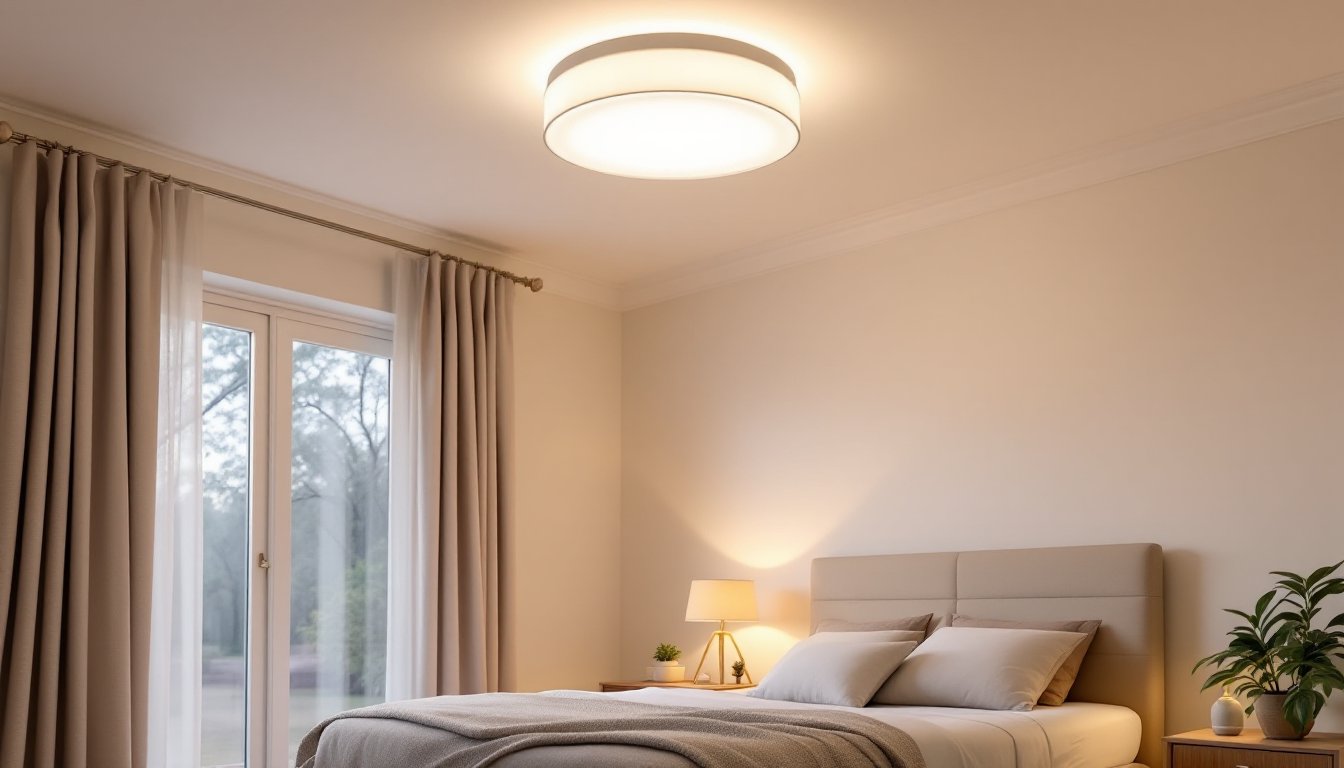
Bedroom lighting doesn’t get the attention it deserves, yet it makes a dramatic difference in how the space feels and functions. The wrong ceiling light can wash out a room with harsh glare, while the right fixture sets the tone for both relaxation and practical visibility when needed. Whether someone is reading, getting dressed, or winding down before sleep, ceiling lighting anchors the entire bedroom design and usability. This guide walks through the most practical ceiling lighting options for bedrooms, helping DIYers and homeowners understand what works, how to measure light output, and what installation actually entails. The goal is straightforward: get the right light in place that matches the bedroom’s layout and the household’s needs.
Table of Contents
ToggleKey Takeaways
- Ceiling lighting for bedroom serves dual purposes: providing ambient illumination for daily tasks and creating a relaxing atmosphere for winding down at night.
- Flush mount fixtures work best for 8-foot or lower ceilings, while chandeliers require high ceilings (10+ feet) and larger rooms to maintain proper proportions.
- Brightness should be measured in lumens, not watts; aim for 2,500 to 5,000 lumens depending on room size, using the formula of square footage multiplied by 1.5 for accurate estimates.
- Choose warm color temperatures of 2,700K to 3,000K for bedrooms to promote relaxation, and select dimmable fixtures paired with LED bulbs for flexible lighting control.
- For standard fixture installation, always turn off the circuit breaker, verify the outlet box supports the fixture’s weight, and connect wires (black to black, white to white) securely with wire nuts.
- Smart lighting options like Philips Hue and LIFX offer wireless control and color temperature adjustments, but require a compatible hub or router and add upfront cost.
Why Ceiling Lighting Matters in Your Bedroom
Ceiling lighting serves dual purposes in a bedroom: it provides ambient illumination for tasks like getting dressed and navigating the space safely, and it sets the mood for unwinding at the end of the day. Poor lighting often leads people to add multiple lamps and fix-up solutions that clutter nightstands and create uneven shadows. A well-chosen ceiling fixture eliminates that chaos.
The bedroom’s ceiling light gets used differently than living areas. It’s not always on: people often rely on task lighting like bedside lamps for evening reading. That means the ceiling fixture should be easy to control, ideally on a dimmer or on a separate circuit from other lights, so it can fade into the background when not needed. Also, ceiling height matters. A 9-foot ceiling needs a different fixture style than a 12-foot vaulted ceiling: proportions affect both visual balance and how light distributes in the room.
Another practical consideration: installation. Most bedrooms have an existing ceiling outlet, which simplifies the job. But, if the bedroom lacks one or if rewiring is needed, understanding the scope upfront prevents costly surprises. Some fixtures require a standard outlet box: others need reinforced bracing for heavier chandeliers. This is where building codes like the National Electrical Code (NEC) come into play, fixtures must be properly supported and grounded.
Types of Ceiling Light Fixtures for Bedrooms
Ceiling fixtures fall into a handful of categories, each with strengths suited to different bedroom layouts and styles.
Flush Mount and Semi-Flush Fixtures
Flush mount fixtures sit flat against the ceiling, making them ideal for bedrooms with 8-foot or lower ceilings where a hanging fixture would obstruct headroom or look cramped. These are straightforward to install, they mount to the standard outlet box, and they come in endless styles, from modern to traditional. Semi-flush fixtures hang 4 to 8 inches below the ceiling, offering a bit more visual interest and better light diffusion without needing the clearance a full pendant demands.
Flush mounts typically use standard A19 or A21 bulbs (the common household size), making bulb replacement simple and inexpensive. They’re also widely available at home improvement stores, so if one fails mid-project, a replacement is easy to find. The downside: if the fixture is purely functional with no shade or diffuser, the light can feel harsh and glaring, particularly for bedrooms.
When selecting a flush mount, check the diameter (typically 10 to 20 inches for bedrooms) and confirm the outlet box can support it. Standard boxes hold up to 50 pounds: heavier fixtures need a pancake box or reinforced brace. Always verify the fixture’s weight on the product label before purchasing.
Chandeliers and Pendant Lights
Chandeliers add elegance and usually feature multiple bulbs, spreading light evenly across the room. But, they work best in bedrooms with high ceilings (10 feet or higher) and larger square footage, so they don’t overwhelm the space. A chandelier in a small bedroom can look absurdly oversized. When considering one, measure the bedroom’s width and depth: the chandelier diameter should not exceed one-tenth the room’s width. A 12-by-14-foot bedroom works with a 14-inch chandelier: a 10-by-10-foot bedroom needs something closer to 12 inches or smaller.
Pendant lights, hanging single or clustered fixtures, work well in medium-sized bedrooms when placed off-center above a seating area or accent wall, rather than dead-center above the bed. They add architectural interest while maintaining functionality. Both styles require a ceiling-rated box capable of supporting their full weight plus vibration. Installation is more involved than a simple flush mount, often requiring a mounting bracket and cross-brace if the existing box isn’t reinforced.
One important note: chandeliers and pendants can create glare when viewed at eye level, so look for fixtures with frosted or fabric shades that diffuse light softly. Clear glass or bare bulbs often feel too bright and unflattering in a bedroom setting.
How to Choose the Right Brightness and Color Temperature
Brightness is measured in lumens, not watts. A modern 9-watt LED bulb can produce the same light as an older 60-watt incandescent, but lumens tell the real story. For a bedroom ceiling fixture, aim for 2,500 to 5,000 lumens total, depending on room size and whether the fixture is the only light source or supplemented by bedside lamps.
A quick rule of thumb: multiply the room’s square footage by 1.5 to estimate needed lumens. A 12-by-12-foot bedroom (144 square feet) needs roughly 216 lumens per fixture. But, if the bedroom receives natural daylight and the ceiling fixture is used mainly in evenings, something closer to 3,000 lumens may feel right. Always compare fixtures’ lumen ratings on product sheets, manufacturers list them prominently, rather than relying on “brightness” claims in marketing copy.
Color temperature, measured in Kelvins (K), matters as much as brightness. Warmer tones (2,700K to 3,000K) feel cozy and promote relaxation, ideal for bedrooms. Cool white (4,000K to 5,000K) reads as clinical and energizing, better suited to kitchens and work areas. For a bedroom, stick with 2,700K or 3,000K bulbs to maintain that inviting atmosphere.
Also consider whether the fixture allows bulb dimming. A dimmable LED bulb paired with a dimmer switch gives flexibility: bright for morning routines, dimmed for evening wind-down. Check that both the bulbs and the fixture support dimming: not all LEDs do, and older dimmers may flicker with certain LED models. A quality dimmer rated for LED eliminates most flicker issues.
Installation and Smart Lighting Considerations
Before starting installation, turn off the circuit breaker supplying the existing ceiling light and test that the power is off using a voltage tester or multimeter. This is non-negotiable safety. If the bedroom has no ceiling outlet or requires new wiring, that’s a job for a licensed electrician: electrical work often requires a permit and inspection, depending on local codes.
For a standard swap of an existing fixture:
- Remove the old fixture, disconnecting the black (hot), white (neutral), and green or bare copper (ground) wires.
- Verify the outlet box is stable and supports the new fixture’s weight.
- Install the new mounting bracket according to the manufacturer’s instructions.
- Connect wires using wire nuts, twisting black to black, white to white, and grounding wires together, then capping each bundle securely.
- Secure the fixture to the bracket, install bulbs, and restore power.
Wear safety glasses during this work: dust and small debris fall when the old fixture comes down. Keep a headlamp or shop light handy, working overhead in dim conditions is frustrating and accident-prone.
Smart lighting has become mainstream and offers real benefits in bedrooms. A smart bulb or fixture with built-in wireless control lets someone adjust brightness and color temperature from a phone or voice command, eliminating the need to reach for a wall switch at night. Options range from basic dimming to full color-temperature shifts (from warm evening light to bright morning light). Popular brands include Philips Hue, LIFX, and Wyze, each with different price points and ecosystem compatibility. Smart fixtures add cost upfront but eliminate the need to replace regular bulbs: the fixture itself handles all the smarts.
Note: smart bulbs require a compatible hub or wireless router nearby. Check product requirements before purchasing to avoid buying something that won’t work in the bedroom’s setup.
Conclusion
Picking the right bedroom ceiling light comes down to matching the fixture’s style and function to the room’s size, ceiling height, and how the space will be used. Flush mounts suit tighter spaces: chandeliers shine in larger rooms with high ceilings. Brightness should be measured in lumens, color temperature in Kelvins, stick with warm tones for bedrooms. Installation is usually straightforward if an outlet already exists, but don’t hesitate to call a professional if wiring is involved. With the right fixture and bulbs in place, the bedroom becomes a more functional and inviting retreat.