
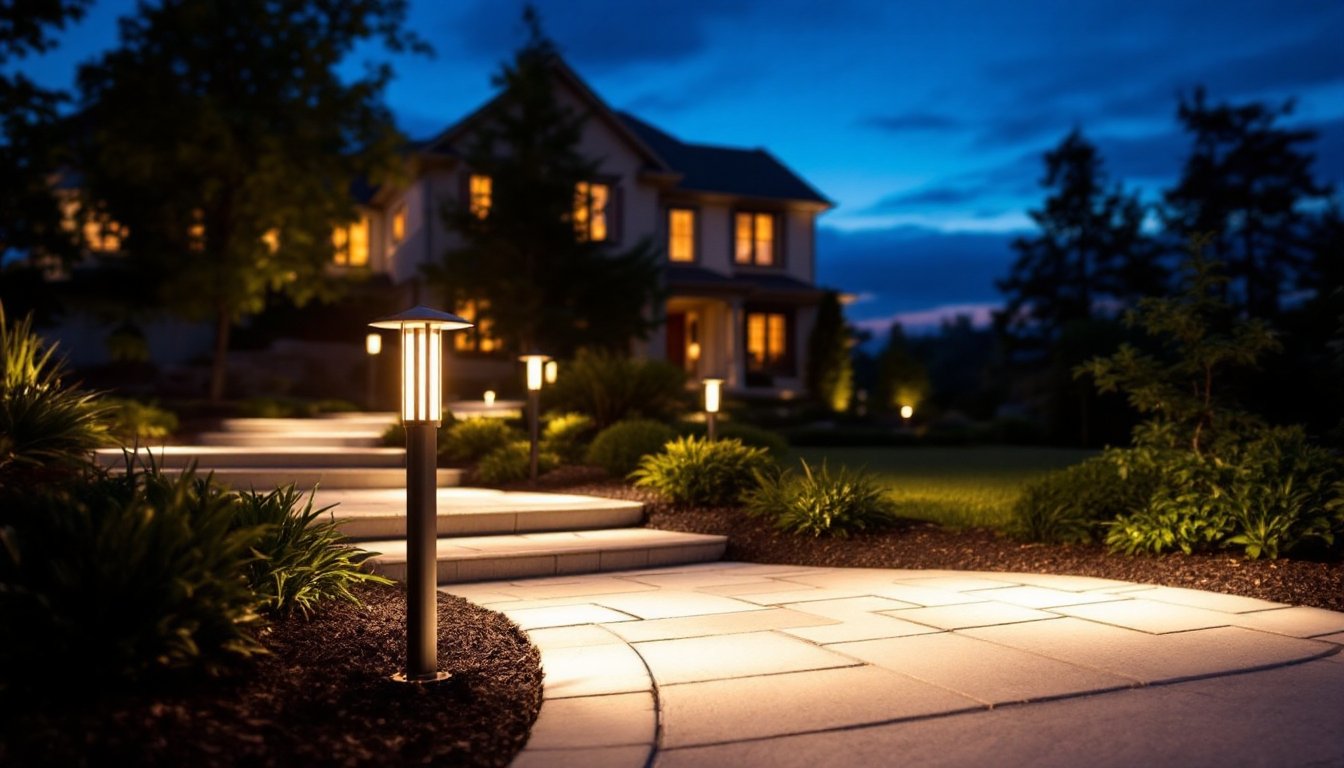
A well-lit walkway is more than just attractive, it’s essential for safety and home security. Stumbling over unseen steps, tripping on uneven ground, or worse, becoming a target for theft because the approach to a home is dark are real risks that proper outdoor walkway lighting eliminates. In 2026, homeowners have more options than ever, from solar-powered stake lights that need no wiring to professional hardwired systems that deliver consistent, reliable illumination night after night. The right choice depends on budget, aesthetic preferences, and the specific layout of the walkway. This guide breaks down the available options, installation methods, and practical considerations that ensure both safety and curb appeal.
Table of Contents
ToggleKey Takeaways
- Outdoor lighting for walkways prevents trips, falls, and theft while improving home value and curb appeal.
- Solar-powered pathway lights offer hassle-free installation with no wiring, but produce modest brightness (20–100 lumens) and perform inconsistently in cloudy or northern climates.
- Hardwired and low-voltage systems deliver reliable illumination and are ideal for permanent installations, with low-voltage options providing a cost-effective middle ground at $200–400 for basic setups.
- Aim for 50–100 lumens per fixture spaced 8–12 feet apart with warm-to-cool white color temperatures (2700K–3500K) to balance safety, comfort, and energy efficiency.
- Use a mix of accent lights and task lights rather than uniform brightness, and always ensure outdoor fixtures are rated IP65 or higher and protected by GFCI outlets for safety.
- Walk your property at night before choosing a system to identify dark spots and hazards, then select the lighting type that matches your budget, climate, and maintenance preferences.
Why Proper Walkway Lighting Matters
Walkway lighting serves a dual purpose: it prevents trips and falls by illuminating potential hazards, and it deters intruders by eliminating dark corners around the property. From a safety standpoint, the National Council on Aging reports that falls are the leading cause of injury among older adults, and poor outdoor lighting is a significant contributing factor. A well-lit path takes that risk off the table.
Beyond safety, lighting affects home value and curb appeal. A clearly lit entrance and approach create a welcoming impression and suggest a well-maintained property. It also extends the usability of outdoor spaces, patios, decks, and gardens become functional after dark.
Before choosing a system, walk your property at night and identify where shadows pool or where steps and grade changes aren’t obvious. Take notes on which areas feel unsafe or poorly lit. This inventory will guide the type and placement of fixtures you select.
Types of Outdoor Walkway Lights
Solar-Powered Options
Solar lights are the go-to choice for renters, budget-conscious homeowners, and anyone who wants to avoid running electrical lines. A typical solar stake light or solar pathway light absorbs sunlight during the day via an integrated photovoltaic cell and automatically illuminates for 6–10 hours at night using a rechargeable battery.
The main advantage is zero installation hassle: stake into soil, adjust the angle if needed, and you’re done. No digging trenches, no permits, no electrician. The trade-off is that output tends to be modest, most residential solar lights produce 20–100 lumens, compared to 400+ lumens for a hardwired 40-watt halogen fixture. This makes them ideal for subtle accent lighting along established paths but less reliable as the sole light source for a dark driveway.
Performance varies with geography and season. In northern climates with short winter days, solar lights dim noticeably. Cloudy regions see reduced charging. Battery quality matters too: look for units with lithium-ion or high-capacity NiMH batteries rather than cheap alkaline replacements. Most residential solar pathway lights cost $10–40 per unit.
Hardwired and Low-Voltage Systems
Hardwired systems connect directly to household electricity via underground conduit, typically requiring a licensed electrician and a permit. They’re the gold standard for reliable, bright illumination in any weather or season. A typical setup uses 12/2 or 14/2 UF cable (rated for direct burial) run in schedule 40 PVC conduit from a dedicated 20-amp circuit breaker to a series of fixtures. This allows control via a wall switch or timer, and brightness remains consistent.
Low-voltage systems are a popular middle ground. A transformer steps household current (120V) down to 12V, and smaller gauge wire connects to fixtures. Installation is simpler, no conduit required for outdoor low-voltage cable in most jurisdictions, but check local code. These systems are safer (lower shock risk) and cheaper to run than full 120V circuits. Output ranges from 50–300 lumens per fixture depending on the bulb.
Both hardwired and low-voltage systems work with LED, halogen, or incandescent bulbs, though LEDs are now the standard: they’re efficient, long-lasting (25,000+ hour lifespan), and cost less to operate than incandescent. Hardwired systems typically cost $500–2,500 installed, depending on distance and fixture count: low-voltage kits start around $200–400 for a basic setup.
Choosing the Right Brightness and Color Temperature
Lumens, not watts, define brightness. A modern 12W LED bulb might produce 1,000 lumens, while an old 60W incandescent produces only 800 lumens. For walkways, the Illuminating Engineering Society recommends a minimum average illumination of 5–10 foot-candles (roughly 50–100 lumens per fixture, spaced 8–12 feet apart). This is enough to see obstacles and footing clearly without being harsh or wasting energy.
Color temperature, measured in Kelvin, affects both mood and insect attraction. Warm white (2700K–3000K) feels inviting and matches traditional home lighting. Cool white (4000K–5000K) is brighter-looking and better for security, but can feel institutional. For a walkway, 2700K–3500K is ideal: it’s welcoming without being so warm it blurs details.
One common mistake is over-lighting. A row of high-output fixtures creates glare, shadows, and wasted energy. Spacing and overlap matter. Use a mix of accent lights (subtle, highlighting steps or plants) and task lights (brighter, at entry points and changes in grade) rather than uniform brightness everywhere. Consider dimmers or smart controls if the walkway serves multiple purposes or if you want to adjust intensity seasonally.
Installation Tips and Best Practices
For solar lights: Clean the photovoltaic panel when you install it: dust and debris reduce charging efficiency. Stake lights work best in loose soil: if your ground is hard clay, drill a pilot hole first or use a rubber mallet. Check the light output after a few days of operation, if it’s dim, the battery may need several full charge cycles, or you may need to reposition the light to catch more sun.
For low-voltage and hardwired systems: Plan the run before digging. Walk the intended route with a hose or chalk line. Mark any underground utilities (call 811 in the US before you dig). If you’re running cable, use a spade or trenching tool to create a shallow groove 6–10 inches deep: many codes require direct-burial cable inside conduit for added protection, though low-voltage cable in some jurisdictions can be buried without conduit. Check your local electrical code.
When installing fixtures, ensure they’re rated for outdoor use (IP65 or higher for wet environments). Ensure the power source is on a dedicated circuit with a GFCI (ground-fault circuit interrupter) outlet to prevent shock hazard, this is code in most jurisdictions. Test each fixture before burying cable.
For both types of systems, read the manufacturer instructions completely before starting. Hardwired work should be handled by a licensed electrician unless you have documented electrical experience and know your local code. This is not an area to improvise.
Maintenance: Solar lights need periodic cleaning and battery replacement every 2–3 years. Hardwired and low-voltage systems need less upkeep but should have bulbs checked annually and fixtures cleared of debris. Use a gentle brush or cloth: avoid abrasive cleaners that scratch lenses.
Conclusion
Safe, attractive walkway lighting is achievable at any budget. Solar lights suit small projects or renters: low-voltage systems offer a balance of reliability and DIY installation: hardwired systems deliver the brightest, most consistent results for permanent installations. Measure your space, identify dark spots, and choose fixtures matched to your climate and the task at hand. Proper lighting pays for itself in safety and peace of mind.