
Kitchen lighting has evolved far beyond a single overhead fixture casting harsh shadows across the counter. Today’s kitchen lighting blends function with design intent, giving homeowners real control over how their workspace looks and performs. Whether someone is tackling a full remodel or upgrading existing fixtures, understanding current trends helps make informed choices that improve usability and aesthetics. This guide walks through the practical approaches reshaping kitchens in 2026, from smart systems that respond to daily rhythms to sculptural fixtures that anchor a room’s design. Kitchen lighting trends now reflect both energy efficiency and personal style, making it worth taking time to plan the right mix before tools hit the wall.
Table of Contents
ToggleKey Takeaways
- Kitchen lighting trends now emphasize smart systems and layered lighting design that blend function with aesthetics, moving beyond single overhead fixtures.
- Smart lighting systems allow control over brightness, color temperature, and scheduling via smartphone or voice command, integrating with platforms like Alexa and Google Home for convenient scene management.
- LED technology reduces energy consumption by 75–80% compared to incandescent bulbs and lasts 25,000–50,000 hours, delivering both cost savings and sustainability benefits.
- Layered lighting design combines ambient, task, and accent lighting—such as under-cabinet strips, pendant lights above islands, and recessed can lights—to create functional and inviting kitchens without glare.
- Tunable color temperature technology lets homeowners adjust lighting from warm white (2700K) for evening relaxation to cool white (5000K+) for clear task visibility throughout the day.
- Statement fixtures in brass, black metal, or ceramic finishes serve as design anchors that elevate kitchen aesthetics while high-quality options with 10-year warranties ensure longevity over budget alternatives.
Smart And Connected Lighting Systems
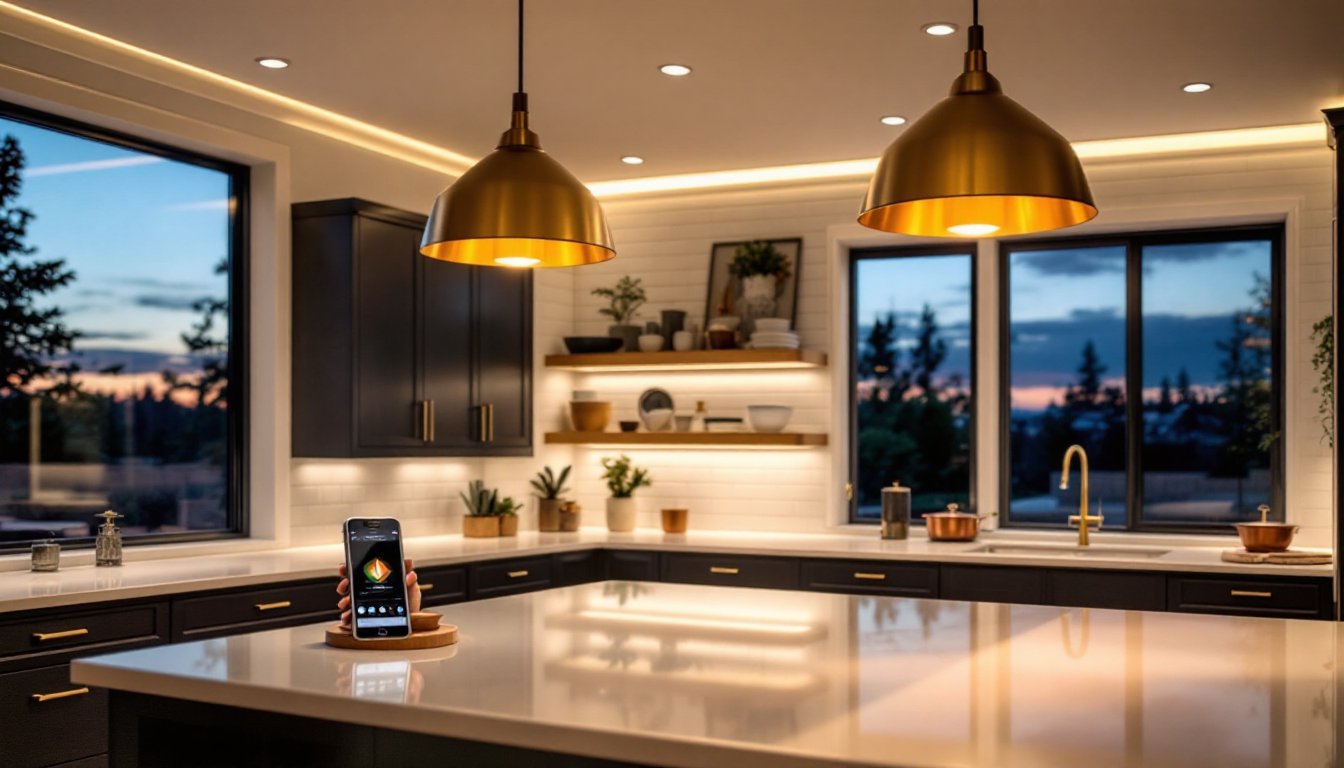
Smart lighting systems have moved from novelty to practical investment for kitchens. Homeowners can now control brightness, color temperature, and scheduling from a smartphone or voice command, a genuine convenience when hands are full or working across multiple zones. Systems like those using WiFi-enabled LED bulbs or hardwired smart switches integrate with common platforms (Alexa, Google Home, Apple HomeKit) and let users create scenes: bright white for meal prep, softer tones for evening cooking, or even syncing lights to circadian rhythms to support natural sleep cycles.
Installation varies by system type. Retrofit smart bulbs screw into existing sockets, no rewiring required, though smart switches demand proper installation at the breaker panel and should be left to a qualified electrician if unfamiliar. Budget factors include upfront hardware cost (smart switches range $40–$150 each, bulbs $15–$60), app subscriptions (most are free but premium tiers exist), and compatibility with existing smart home platforms. A homeowner who already uses Alexa benefits from choosing fixtures that speak the same language rather than juggling multiple apps.
Layered Lighting Design For Functionality And Ambiance
The single overhead light is dead, and for good reason. Layered lighting uses three distinct categories: ambient (overall room brightness), task (focused light where work happens), and accent (highlights and mood). A well-layered kitchen feels larger, safer, and more inviting without requiring three separate fixture installations.
Task Lighting And Accent Lighting Balance
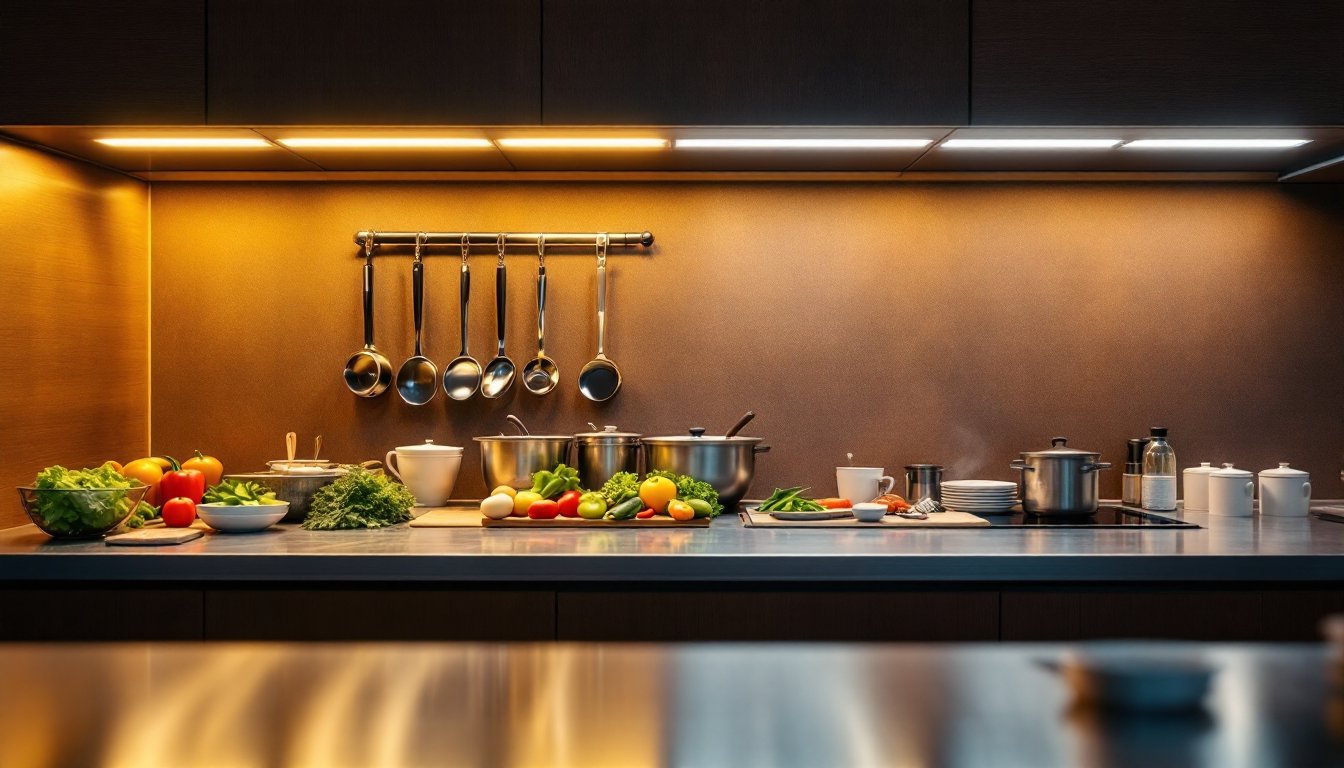
Task lighting directly addresses how kitchens are actually used. Under-cabinet LED strips illuminate countertops where cutting, reading recipes, and prep work happen, these typically mount 12–18 inches below wall cabinets and require a 120V outlet or hardwired connection (permits may apply for hardwired installs: check local code). Pendant lights hung 28–32 inches above island counters focus light downward while keeping fixtures from blocking sightlines. Recessed can lights spaced 3–5 feet apart across ceiling coverage provide ambient fill, while accent lighting (focused spots on open shelving or a backsplash) adds visual interest without functional purpose.
The balance matters: too much task lighting creates glare on glossy surfaces: too little accent makes a kitchen feel institutional. A homeowner should sketch the space, mark prep zones and seating areas, then position fixtures accordingly. For example, someone who does significant meal prep needs stronger under-cabinet lighting, while a household that mostly eats out may prioritize the island pendant for visual appeal.
Sustainable And Energy-Efficient Solutions
LED dominance is no longer a trend, it’s the baseline. Modern LED fixtures consume 75–80% less energy than incandescent equivalents while lasting 25,000–50,000 hours (roughly 10–20 years of daily use). This translates to lower utility bills and far fewer fixture replacements. Kitchen-specific LEDs now come in varying color-rendering indices (CRI ratings of 90+ reproduce food and skin tones naturally, compared to older LEDs that made everything look slightly sickly).
Beyond bulb choice, dimmable LED systems reduce energy draw and extend fixture life by allowing lower brightness when full illumination isn’t needed. Motion sensors on pantry or under-cabinet lights eliminate the need to flip switches in occupied hands. Skylights or light tubes that leverage natural daylight during daytime hours cut daytime electrical demands. Initial cost is higher, dimmable-rated LEDs cost $20–$40 each versus standard LEDs, but payback occurs within 2–3 years for frequently used kitchens. A homeowner on a tight budget should prioritize under-cabinet and task lighting for ROI, then upgrade ambient fixtures as budget allows.
Bold Statement Fixtures And Sculptural Designs
Lighting fixtures are now design anchors, not afterthoughts. Sculptural pendant lights, often in black metal, brass, or ceramic finishes, hang above islands as focal points. Geometric shades (cones, spheres, hexagons) and Edison-filament or globe bulbs visible inside fixtures create visual rhythm that complements modern and vintage aesthetics alike. Linear track lights with articulating heads offer flexibility for non-traditional kitchen layouts while maintaining contemporary appeal.
When selecting statement fixtures, ensure they’re proportional to space. Oversized pendants swallow small kitchens: delicate fixtures look lost in sprawling spaces. A pair of 18–22 inch pendant fixtures typically suits an island 36–48 inches long. Brass and matte black finishes are enduring: trendy neon accents or color-changing LEDs appeal to adventurous decorators but may feel dated quickly. Quality matters: thin-gauge metal, flickering budget fixtures, and loose connections frustrate daily. Reputable makers offer 10-year warranties and replaceable components. For a homeowner valuing longevity, a mid-tier branded fixture beats the cheapest option.
Warm And Tunable Color Temperature Technology
Color temperature, measured in Kelvin (K), dramatically affects how a kitchen feels and functions. Warm white (2700K) mimics incandescent and suits evening or accent lighting. Neutral white (3000–4000K) balances warmth and visibility, working well for task and ambient roles. Cool white (5000K+) maximizes clarity but can feel clinical in residential spaces. The trend toward tunable LEDs lets homeowners adjust color temperature based on time of day or task: bright and cool for morning meal prep, warm and dimmed for evening dining.
Tunable systems use either dual-color fixtures (switching between two preset temperatures via switch or app) or full-spectrum dimmers (continuously variable across the entire Kelvin range). The dual-color approach costs less ($30–$60 per bulb) but offers limited flexibility. Full-spectrum requires compatible dimmers and typically costs $60–$150 per fixture. Most kitchens benefit from warm-white task lighting (reduces eye strain, flatters food) and neutral or cool accents. A homeowner experimenting should buy a few dimmable bulbs in different temperatures, test them in existing fixtures, and commit to the setup that feels right before rewiring.
Conclusion
Kitchen lighting in 2026 prioritizes control, efficiency, and design intention. Smart systems put flexibility at a homeowner’s fingertips, layered designs serve both function and mood, and durable LED technology cuts long-term costs. Statement fixtures and tunable color temperatures give kitchens personality while remaining practical. Planning ahead, mapping zones, understanding local codes for hardwired work, and prioritizing high-use areas first, ensures a lighting upgrade enhances daily life rather than creating frustration. The right lighting makes a kitchen work better and look better, rewarding effort spent on thoughtful design.