
Commercial property managers and business owners face a constant tension: adequate outdoor lighting is essential for safety, security, and curb appeal, yet traditional fixtures drain budgets and waste energy. LED outdoor lighting fixtures have fundamentally shifted that equation. Unlike older halogen or metal halide systems, modern LED outdoor lighting delivers superior brightness, cuts energy consumption by 75 percent or more, and lasts 15 to 25 years with minimal maintenance. For commercial spaces, parking lots, building facades, entryways, and landscaping, upgrading to LED isn’t just an aesthetic choice: it’s a financial and operational decision that pays back quickly. This guide walks you through the core considerations for selecting and deploying LED outdoor lighting fixtures on commercial properties.
Table of Contents
ToggleKey Takeaways
- LED outdoor lighting fixtures cut energy consumption by 75% or more compared to traditional halogen and metal halide systems, with payback periods typically between 3 to 7 years.
- LED fixtures last 20,000 to 50,000 hours of operation—often exceeding a decade—significantly reducing labor, maintenance, and replacement costs for commercial properties.
- Choose color temperature based on purpose: 3000K for welcoming entryways and landscaping, or 4000–5000K for security and task lighting in parking lots and perimeters.
- Smart LED outdoor lighting controls like occupancy sensors and daylight harvesters can reduce runtime by 20–40%, amplifying energy and cost savings.
- Verify fixtures carry UL listing and DLC certification to ensure safety standards and qualify for utility rebates on commercial installations.
- Plan for electrical infrastructure needs upfront, including voltage requirements (120V, 277V, or three-phase), conduit, and permits to avoid costly panel upgrades or code violations.
Why LED Outdoor Lighting Makes Sense for Commercial Spaces
The case for LED outdoor lighting in commercial settings rests on three pillars: energy savings, lifespan, and reliability. A typical LED floodlight consuming 100 watts replaces a 400-watt metal halide fixture while delivering comparable or better light output, measured in lumens. Over a year, that differential multiplies fast. If a commercial property runs outdoor lights 12 hours daily, that single fixture saves roughly 1,095 kilowatt-hours annually, translating to $150–$200+ in electricity costs, depending on regional rates.
Second, lifespan matters. Traditional outdoor fixtures require bulb replacement every 1–3 years: LEDs last 20,000 to 50,000 hours of operation, often exceeding a decade before dimming meaningfully. That cuts labor, disruption, and material costs. Third, LEDs ignite instantly (no warm-up lag), tolerate temperature swings, and resist vibration and impact better than fragile discharge tubes. For commercial properties managing large fixtures or working with contractors, fewer service calls mean lower lifetime costs. Payback periods typically range from 3 to 7 years, with the gap narrowing as electricity prices climb and LED prices fall.
Types of Commercial LED Outdoor Fixtures
Floodlights and Spotlights
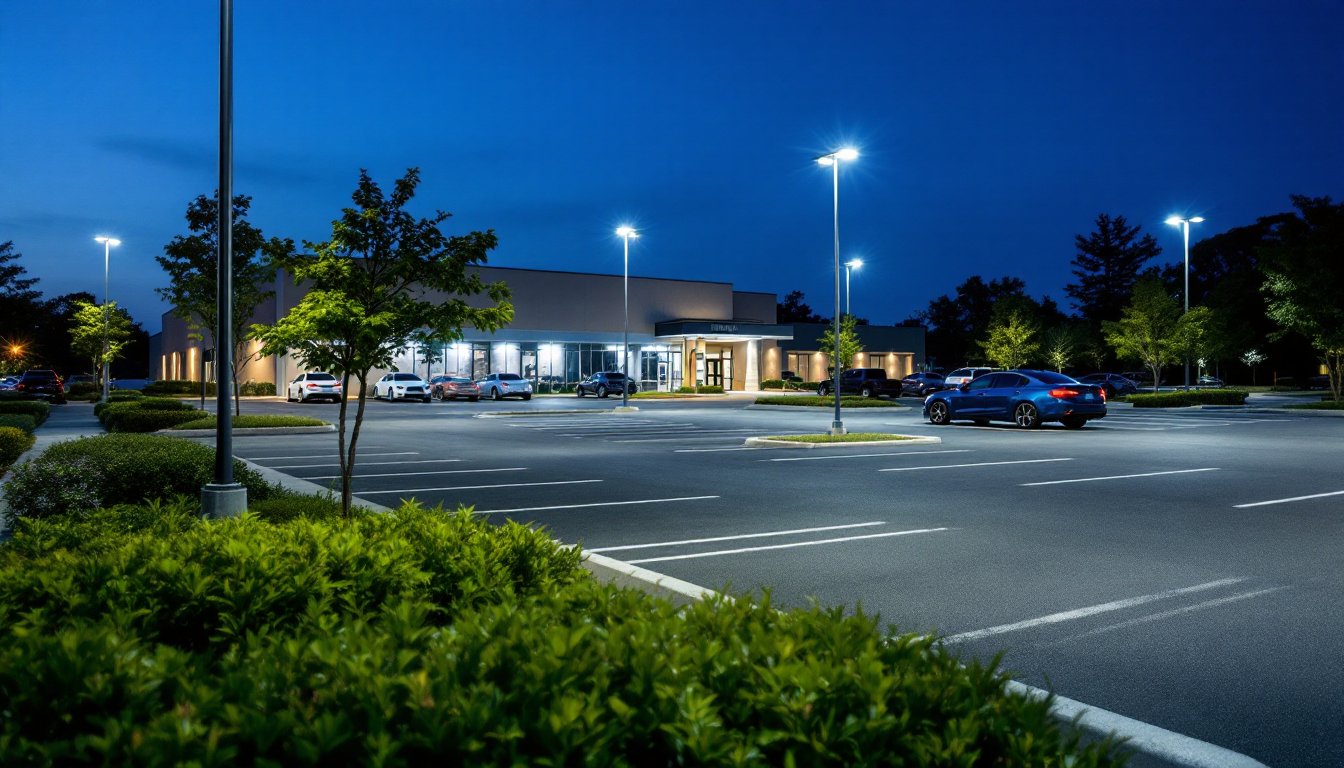
LED floodlights are the backbone of commercial outdoor lighting. They emit a broad, even spread of light, typically 120 to 180 degrees, making them ideal for illuminating large areas like parking lots, storage yards, and building perimeters. Commercial-grade floodlights come in wattages from 30 to 300 watts, with brightness ranging from 3,000 to 40,000 lumens. Mounting options include pole-mounted (on existing standard 1.33-inch diameter poles) and wall-mounted brackets.
Spotlights, by contrast, cast a narrow, concentrated beam, often 15 to 45 degrees, perfect for accent lighting on signage, architectural features, or trees. Both types should carry IP65 or higher ratings (denoting dust-tight and water-jet resistant) for durability in outdoor conditions.
Wall Packs and Canopy Lights
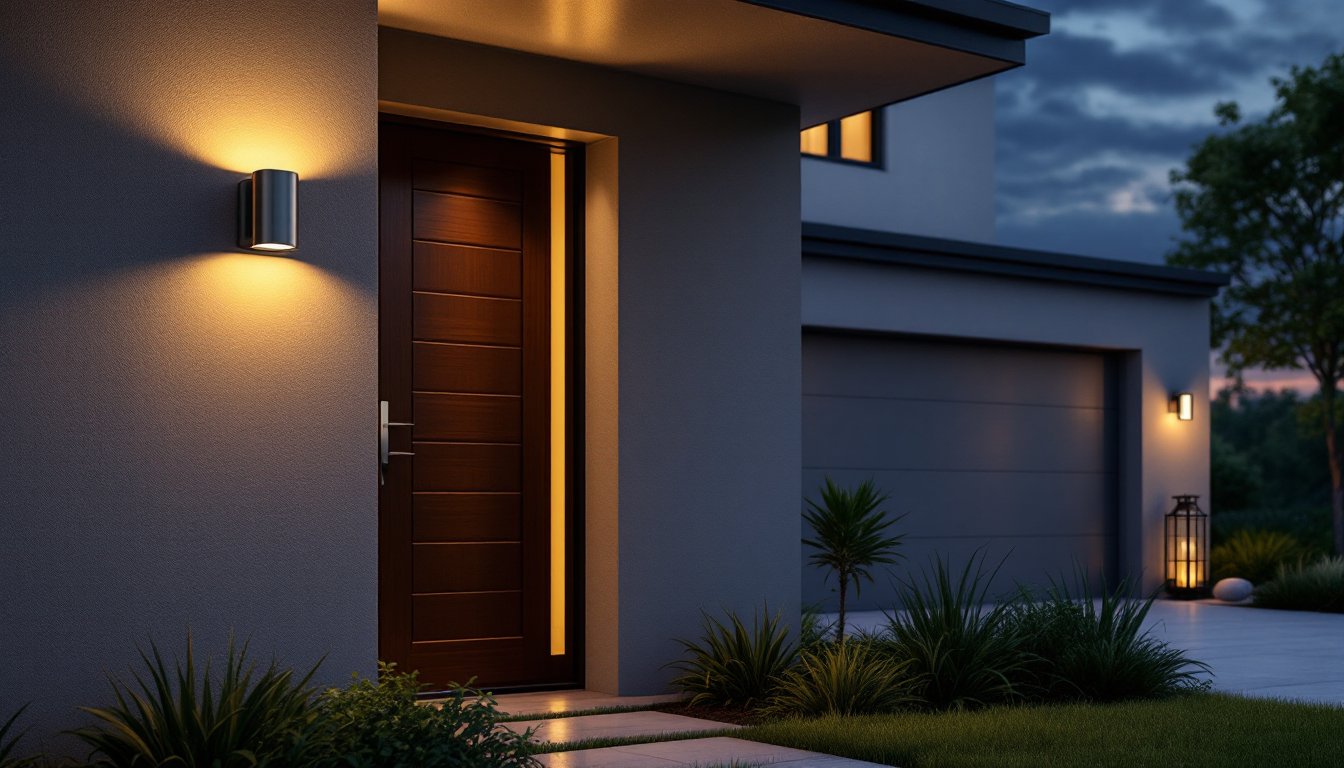
Wall packs are single-fixture units mounted directly to building walls, soffits, or overhangs. They’re compact, easy to install (typically requiring only a standard electrical box), and ideal for entryways, loading docks, and emergency egress areas. Most commercial wall packs output 2,000 to 8,000 lumens and accept a variety of mounting brackets.
Canopy lights hang beneath awnings, gas station canopies, or structural overhangs. They’re designed to resist dust and contaminants common at fueling stations and covered outdoor dining areas. Canopy fixtures often feature built-in sensors and are available in 120-277V (three-phase) configurations standard in commercial installations.
Key Features to Evaluate When Choosing LED Fixtures
When specifying LED outdoor lighting for a commercial property, prioritize these factors:
Color Temperature (CCT): Choose 3000K (warm, yellowish) for landscaping and entryways where a welcoming tone suits the brand, or 4000–5000K (cool, neutral) for security and task lighting like parking lots. Higher color temps (5000K+) promote alertness and visibility but can feel harsh.
Lumens and Light Distribution: Determine required footcandles, typical parking lots need 1–3 foot-candles, security perimeters 5–10. Lumens specify raw output: lux distribution (light intensity per square meter) tells you whether the fixture throws light far or spreads it wide. Avoid oversizing: excessive light wastes energy and creates light pollution.
Dimmability and Controls: Smart LED fixtures integrate with occupancy sensors, daylight harvesters, and time clocks, reducing runtime by 20–40 percent. If dimming, confirm the fixture and driver (the power supply unit) are dimmable-rated: standard-issue LEDs flicker or fail if forced down non-dimmable circuits.
Thermal Management: Quality fixtures include aluminum heatsinks that dissipate LED heat, preserving color output and lifespan. Poor thermal design shortens life and dims output faster than specs claim.
Build Quality and Certifications: Require UL-listed fixtures (safety standard in North America) and DLC certification (DesignLights Consortium) to access utility rebates. Check warranty length, commercial-grade fixtures typically offer 5–10 years.
Vibration and Shock Tolerance: High-bay and parking fixtures experience vibration: seek fixtures with potted drivers (sealed against moisture and vibration) rather than raw circuit boards.
Installation and Maintenance Considerations
Electrical Planning: Commercial LED fixtures run on 120V or 277V single-phase, or 347–480V three-phase depending on site infrastructure. Confirm your electrical service capacity before specifying fixtures: oversizing can require panel upgrades or new circuits, a cost often overlooked in initial budgets. Existing conduit and wire may be reused if gauge is adequate: calculate voltage drop over runs longer than 100 feet.
Permits and Standards: Outdoor lighting falls under local electrical codes (typically the National Electrical Code or NEC) and increasingly, municipal dark-sky ordinances limiting light pollution. Some jurisdictions require photometric plans, formal layouts showing footcandle distribution, for new installations. Budget time (and often engineer fees) for approval.
Wiring and Labor: If trenching or running exposed conduit is required, factor in excavation and conduit installation costs. Simple pole-mount or wall-pack retrofits on existing circuits may be a two-person job: complex layouts benefit from a licensed electrician.
Maintenance: LEDs require almost no preventive upkeep beyond occasional cleaning. Use a soft, damp cloth: avoid abrasive materials on lens surfaces. Inspect fixtures annually for water ingress or debris blocking ventilation. Drivers rarely fail, but ensure access to spare units if critical lighting goes dark.
Decommissioning Old Fixtures: Recycling is prudent, halogen and metal halide bulbs contain mercury and should not enter landfills. Many cities and scrap dealers accept used fixtures: confirm disposal before removal.
Conclusion
LED outdoor lighting for commercial properties delivers measurable ROI through lower energy bills, reduced maintenance, and extended service intervals. Start by auditing your current fixtures, calculating average operating hours, and determining required light levels for each zone. Specify fixtures with robust thermal design, appropriate color temperature, and smart controls where feasible. Work with a lighting designer or contractor if footcandle calculations and electrical planning exceed your confidence level: a small upfront investment in design prevents costly missteps. The shift to LED is no longer a question of whether, but when, and the sooner you begin, the faster the payback accumulates.