
Modern pendant lighting has become a cornerstone of contemporary interior design, offering homeowners a practical way to combine function with style. Unlike bulky chandeliers or dated flush mounts, modern pendants hang at eye level or lower, making them ideal focal points for kitchens, entryways, and living spaces. Whether a DIYer is upgrading a dated fixture or installing lighting from scratch, understanding what defines modern pendant design helps make smarter choices about placement, materials, and installation. This guide walks through the essentials, from design principles to installation considerations, so anyone can confidently select and install modern pendants that match their space and skill level.
Table of Contents
ToggleKey Takeaways
- Modern pendant lighting combines clean lines, minimalist forms, and honest materials like glass, metal, and concrete to create functional yet stylish fixtures that work in diverse interior design settings.
- Proper installation height for modern pendants is 12–18 inches below an 8-foot ceiling, and spacing should be 24–36 inches apart over islands and bars, with careful consideration of weight compatibility with your ceiling electrical box.
- Modern pendants serve dual purposes as task-focused and ambient lighting, allowing homeowners to direct light where needed without flooding entire rooms while maintaining visual sophistication in any space.
- Smart home integration and energy-efficient LED modules are reshaping modern pendant designs, with many fixtures now offering voice control, color-tuning bulbs, and 80% energy savings compared to incandescent options.
- Matching metal finishes throughout your home (matte black, brushed brass, or stainless steel) and selecting durable, wipeable materials like glass or metal ensures your modern pendant lighting looks intentional and remains easy to maintain.
What Defines Modern Pendant Lighting
Key Design Characteristics
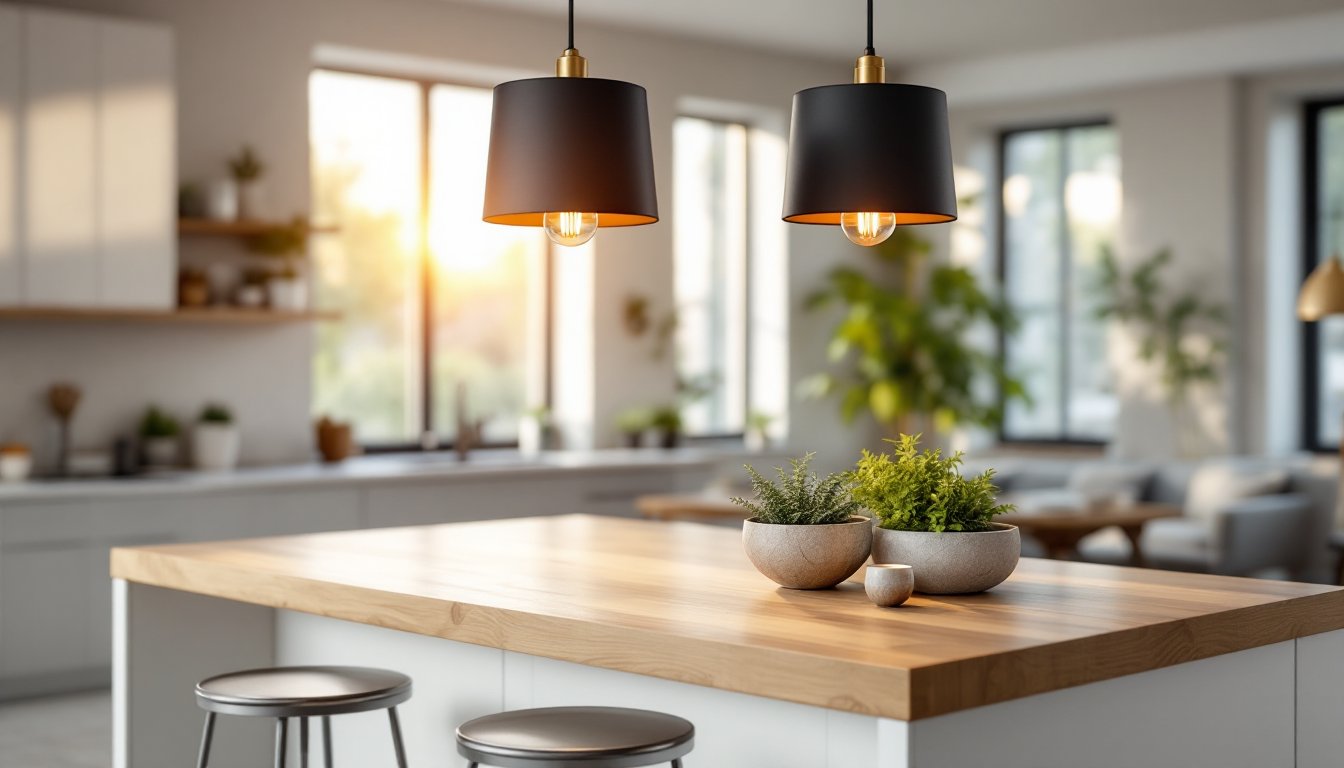
Modern pendant lighting strips away ornament and prioritizes clean lines, minimalist forms, and honest materials. A typical modern pendant uses a single or small cluster of light sources suspended by a metal rod, cord, or chain from a ceiling-mounted canopy. The shade, whether glass, ceramic, metal, or fabric, is uncluttered and often geometric: cylinders, spheres, cones, or asymmetrical shapes that catch light in interesting ways.
Key markers include exposed filament or industrial bulbs (Edison-style or vintage-look LEDs), matte black or brushed brass finishes, and materials like clear or frosted glass, concrete, or wire mesh. Many modern pendants intentionally show their electrical components, no hiding the bulb behind a shroud. Proportions matter too: a well-designed modern pendant has a deliberate ratio between shade diameter and overall drop length, creating visual balance rather than fussy detail.
Compare this to traditional fixtures: a crystal chandelier or Baroque-style pendant announces itself loudly and demands to be the room’s star. Modern pendants, by contrast, integrate into their surroundings while still making a statement through simplicity and material quality. They work equally well in a minimalist Scandinavian kitchen or an industrial loft, because they don’t rely on ornate style markers to communicate “trendy”, they rely on proportion and craft.
Why Modern Pendants Enhance Any Room
Pendant lighting is task-focused and ambient at once. Hung over a kitchen island, dining table, or bathroom vanity, a modern pendant directs light where it’s needed without flooding the entire room. At 12 to 18 inches below a standard 8-foot ceiling (or customized for 9 or 10-foot ceilings), the pendant is low enough to create a cozy zone yet high enough not to obstruct sightlines.
Beyond function, modern pendants shape a room’s character without visual clutter. A small apartment benefits from a sleek pendant over the sink, kitchen table, or entryway, it fills vertical space intelligently and adds sophistication to minimal square footage. In contrast, a sprawling family home might use multiple pendants in a row over an island to create rhythm and distribute light more evenly than a single fixture.
Modern pendants also adapt to various lighting layers. Combine them with ambient overhead lighting, task lighting under cabinets, or accent lights in corners to build a flexible, controllable lighting scheme. Many homeowners install dimmers or smart bulbs in pendants, giving them the power to adjust brightness and color temperature throughout the day, warm white for evening gatherings, brighter white for cooking or assignments.
Popular Modern Pendant Styles and Materials
Glass pendants (clear, frosted, or tinted) dominate modern design. Clear glass shows the bulb and fixture wiring, reinforcing that industrial-modern aesthetic: frosted glass diffuses light softly and adds a subtle contemporary touch. Look for mouth-blown or hand-finished glass to signal quality, machine-made glass is fine for budget projects, but imperfections in artisan glass catch light beautifully.
Metal shades in matte black, polished or brushed brass, copper, or stainless steel offer durability and a cleaner look. Perforated or cage-style metal shades (open wireframes) create dramatic shadow patterns on ceilings and walls. Solid metal shades direct light downward efficiently, ideal for task areas like kitchen islands.
Concrete and ceramic pendants appeal to industrial and Scandinavian aesthetics. Concrete is heavy, ensure ceiling framing supports the fixture, but adds sculptural weight. Ceramic offers lighter alternatives with similar visual impact.
Fabric shades (linen, cotton) soften the modern look and work well in bedrooms or living rooms where ambient light matters more than task lighting. They diffuse light evenly but require more frequent cleaning because dust clings to fabric.
Hybrid designs blend materials: a metal top with a glass shade, or a ceramic body with a cord suspension. These combinations often feel more intentional and sophisticated than single-material fixtures.
Where to Install Modern Pendant Lighting
Kitchen islands and bars are the classic pendant zone. Homeowners typically install two to three pendants in a row, spaced 24 to 36 inches apart and hung 12 to 18 inches below the countertop (or lower if ceilings are high). This placement lights the work surface without glare on faces.
Dining tables benefit from a single pendant or cluster positioned at table height, roughly 30 inches above the surface for a standard 30-inch-tall table. Adjust as needed for pendant size and desired visual balance.
Bathrooms over vanities follow similar logic: hang the pendant 12 to 18 inches above the sink, flanked by wall sconces if the space allows. A single pendant works for powder rooms: larger baths may use two or three in a row.
Entryways and hallways use pendants as sculptural punctuation marks. A single eye-catching fixture here sets the home’s contemporary tone before visitors enter main living areas.
Bedside alternatives to traditional table lamps are gaining traction: petite pendants hung on either side of a bed, 18 to 24 inches from the mattress edge, create a modern, space-saving look. Ensure clearance for reaching, reading, and head bumps.
Before installing, verify that your ceiling electrical box is rated for pendant weight. Modern pendants range from 2 to 15+ pounds depending on material. Call a licensed electrician if unsure or if the box appears cracked, loose, or inadequate.
How to Choose the Right Modern Pendant for Your Space
Measure twice, choose once. Start with ceiling height and desired drop distance. For an 8-foot ceiling, a 12-inch drop is standard: for 9-foot ceilings, 15 to 18 inches works better. Sketch the space and note the fixture’s overall dimensions (width and total length from canopy to bottom of shade).
Consider the bulb. Modern pendants typically accept A19 or A21 screw-in bulbs, G25 globe bulbs, or decorative filament-style LED bulbs. Check the fixture’s maximum wattage and brightness (measured in lumens, 600 to 800 lumens is typical for task lighting over an island: 300 to 400 lumens suits ambient mood lighting). LED bulbs are efficient and long-lasting: avoid incompatibility with dimmers by selecting dimmable-rated LEDs.
Match the finish. Modern homes often use a single metal finish throughout: matte black, brushed brass, or stainless steel. Mixing finishes intentionally (like black and brass) can work, but random mixing reads as accidental. Look at existing light fixtures, door hardware, and cabinet pulls to establish your home’s metal palette.
Think about placement within the space. A small, understated pendant suits a modest kitchen or half bath: a larger statement piece works in an open-concept loft or spacious dining room. Too small and it looks lonely: too large and it dominates awkwardly. If buying online, search for product reviews that include real-space photos or dimensions.
Factor in maintenance. Glass and metal clean easily: fabric and concrete need more upkeep. In kitchens with cooking grease, choose durable, wipeable materials over fabric.
Trends and Innovations in Pendant Lighting
Smart home integration is reshaping pendant lighting. Many modern pendants now pair with WiFi-enabled or Bluetooth bulbs, allowing voice control and scheduling via smartphone apps. Color-tuning bulbs adjust from warm to cool white throughout the day, supporting circadian rhythm awareness, a growing wellness trend in 2026.
Sustainable materials are gaining traction. Designers now offer pendants made from recycled glass, reclaimed wood, or biodegradable resin, appealing to environmentally conscious homeowners. Energy-efficient integrated LED fixtures (where the LED module is built-in, non-replaceable) use 80% less energy than incandescent fixtures and last 25,000+ hours.
Customization and modular systems let homeowners adjust pendant clusters. Some manufacturers offer interchangeable shades and rods, letting a single canopy system swap between materials and styles. This flexibility appeals to renters and homeowners who don’t want to commit to a single look.
Sculptural and asymmetrical shapes continue to push minimalism into more expressive territory. Pendant shades now feature irregular angles, off-center bulb placements, and unexpected proportions, modern without feeling cold or impersonal. Mixed-material designs (metal frames with blown-glass inserts, for example) add textural interest while staying visually clean.
Architectural integration is emerging: pendants designed to recess into or mount flush against ceilings for a seamless, integrated aesthetic when desired, then hang down for task lighting when needed. It’s a hybrid approach for homeowners who want flexibility.
Getting Your Pendant Installation Right
Most modern pendants ship with a mounting canopy, rod or cord, and fixture body. Installation requires turning off power at the breaker and removing the old fixture (if replacing) or working with existing electrical rough-in if starting fresh. Turn off power, remove the canopy and pull the mounting bracket and wiring through the ceiling hole. The new bracket screws to the electrical box: wires connect via twist-on connectors or wire nuts, black (hot) to black, white (neutral) to white, and bare copper (ground) to green or bare. Secure the connection with electrical tape if needed, tuck excess wire into the box, and screw the canopy up tight against the ceiling. Finally, hang the pendant body from the rod or cord, install the bulb, and test.
If the electrical box is inadequate, the wiring feels uncertain, or the box doesn’t sit flush in the ceiling, stop and call a licensed electrician. A shoddy pendant installation can cause fires or injury. The same applies if you’re running new circuits, that’s code-regulated work requiring proper permits and inspection in most jurisdictions.
Don’t forget PPE: wear safety glasses and work gloves while handling the fixture. If installing over water (bathroom), ensure GFCI protection on the circuit. Read the fixture’s manual for weight ratings, voltage, and bulb compatibility before powering on.
Conclusion
Modern pendant lighting delivers style and substance in equal measure. By understanding the defining characteristics, placement principles, and selection criteria, any homeowner can confidently choose and install a fixture that brightens their space and reflects their design sensibility. Start with accurate measurements, honest about what you can safely DIY, and don’t hesitate to bring in a professional electrician when the work exceeds your comfort or code compliance level. The payoff, a lighting fixture that’s both beautiful and functional, is worth the care taken upfront.