
Dining room lighting doesn’t just illuminate food, it sets the mood, defines the space’s character, and makes or breaks a room’s design. In 2026, modern dining room lighting has evolved beyond the old brass chandelier hanging from the ceiling. Today’s trends emphasize flexibility, intentional design, and technology that adapts to how people actually use their spaces. Whether hosting a dinner party or enjoying a casual breakfast, the right lighting transforms the dining experience. This guide walks through contemporary fixtures, smart controls, layering strategies, and sustainable options that deliver both style and function.
Table of Contents
ToggleKey Takeaways
- Modern trendy dining room lighting prioritizes flexibility, smart controls, and intentional design over traditional chandelier styles, adapting to different dining occasions and moods.
- Pendant lights and minimal statement chandeliers positioned 30-36 inches above the table create focal points while providing proper task lighting without overwhelming industrial or contemporary spaces.
- Layered lighting combining task, ambient, and accent fixtures on separate dimmers gives dining rooms the adaptability to transition from formal dinners to casual meals with a single control system.
- Smart, dimmable LED fixtures with tunable color temperature (2700K to 4000K) eliminate the need for multiple fixtures by shifting between warm inviting tones for entertaining and cooler tones for functionality.
- Dining room lighting with 90+ CRI dimmable LEDs delivers 75% energy savings over incandescent bulbs while ensuring food and skin tones appear natural, making sustainable design both practical and economical.
Contemporary Lighting Fixtures That Define Modern Dining Spaces
Pendant Lights and Statement Chandeliers
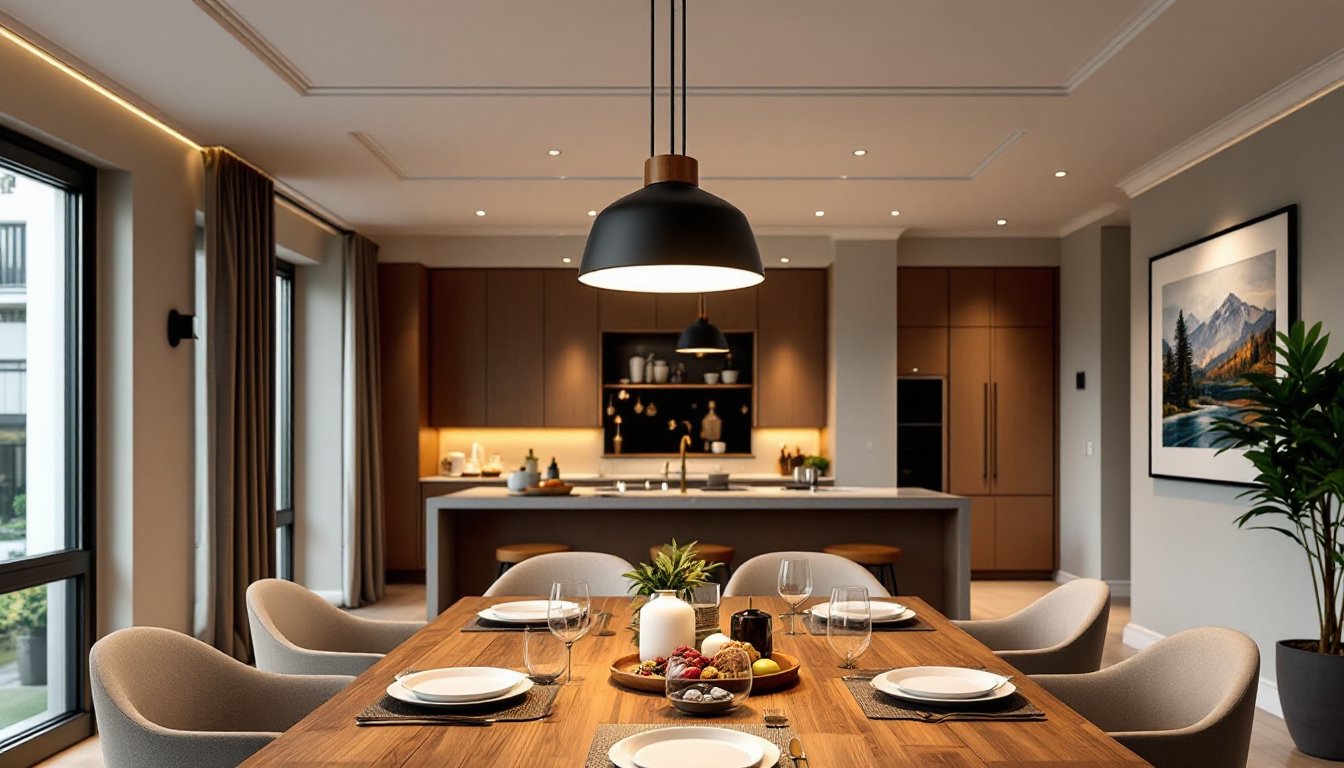
Pendant lights dominate modern dining rooms because they work. A single pendant or a cluster of three to five positioned over the table creates a focal point without overwhelming the room. Modern pendant styles lean toward geometric shapes, natural materials like wood or concrete, and finishes in matte black, brushed brass, or frosted glass.
Statement chandeliers are staging a comeback, but not the ornate crystal kind from decades past. Today’s chandeliers are minimal, sculptural, and often feature asymmetrical designs or unexpected materials, think wire frameworks, sculptural glass forms, or even modular components that can be rearranged. A sputnik-style chandelier (radiating brass or black metal arms with small bulbs) remains a 2026 favorite for its retro-modern appeal.
When choosing pendant or chandelier height, hang the fixture 30 to 36 inches above the table surface for proper task lighting and sightline clearance. If the ceiling is vaulted, adjust upward proportionally. Test the height before permanently mounting.
Minimalist and Industrial Designs
Industrial aesthetics, exposed metal, raw finishes, and functional hardware, continue gaining traction in dining spaces. Edison-style LED filament bulbs paired with simple metal frames create warmth without pretension. Cage-style pendant lights, track lighting with articulating heads, and linear suspension systems all fall into this category.
Minimal doesn’t mean boring. A single architectural pendant in matte black or weathered brass above a dining table reads as both understated and intentional. Pair it with clean lines on the fixture body and avoid decorative fussiness. Recessed downlights with trimless or shallow-trim bezels also fit the minimal aesthetic while providing reliable ambient light.
Both styles integrate well with open-concept homes because they don’t compete visually with adjacent living spaces. Choose fixtures proportional to your table: a 24- to 28-inch pendant works for tables up to 36 inches wide: larger tables need bigger fixtures or multiple pendants.
Smart Lighting Technology for Ambiance and Control
Smart dining room lighting lets you adjust brightness, color temperature, and even color throughout the evening, without rewiring. Wi-Fi or Bluetooth-enabled LED fixtures integrate with voice assistants (Alexa, Google Home) and smartphone apps, giving control from the table or when away from home.
Dimming is non-negotiable for modern dining. A dimmable LED driver and dimmer-compatible bulbs allow you to lower brightness for intimate dinners or raise it for meal prep. Standard incandescent dimmers won’t work reliably with many LEDs, so verify compatibility before purchase.
Color-tuning fixtures shift between warm white (2700K) for evening ambiance and cooler white (4000K) for task lighting, all controlled by an app or voice command. This flexibility eliminates the need for multiple fixture types or manual adjustments.
Integration matters: ensure your chosen smart fixtures work with your existing smart home ecosystem. Some homeowners prefer hardwired solutions (a smart dimmer switch controls conventional LED fixtures) over wireless bulbs for reliability. Both approaches work: the choice depends on your setup’s complexity and your comfort level with wireless technology.
Layered Lighting Strategies for Every Dining Occasion
One overhead fixture rarely delivers the flexibility modern dining requires. Layered lighting combines task, ambient, and accent light so the room adapts to different uses.
Task lighting (pendant or chandelier) illuminates the table for eating and conversation. Aim for 50-100 foot-candles at table height, enough to see food without glare. Pendant lights naturally direct light downward, making them ideal for this layer.
Ambient lighting softens the overall room. Recessed downlights on a separate dimmer, wall sconces flanking a sideboard, or a dimmed overhead fixture provide general illumination without creating shadows. Avoid harsh, unidirectional light: instead, distribute fixtures to create gentle, even coverage.
Accent lighting adds visual interest. Picture lights above artwork, LED strip lighting under a floating shelf, or uplighting behind plants draw the eye and add depth. This layer is optional but transforms the space from functional to intentional.
Wiring these layers on separate circuits and dimmers is essential. You might run task lighting on a three-way dimmer (controlled from two locations), ambient on a separate dimmer, and accent on a third. This setup requires planning during construction or a significant rewire in existing homes, a perfect time to consult a licensed electrician if you’re unsure about circuit capacity or code compliance.
Color Temperature and Mood Setting
Color temperature, measured in Kelvin (K), profoundly affects how diners perceive the space and even the food.
Warm white (2700K) feels inviting and flattering to skin tones. This is the standard for social dining and intimate gatherings. It mimics incandescent warmth without the heat and short lifespan.
Neutral white (3000K to 4000K) works for casual family meals and active entertaining. It’s brighter than warm white without feeling clinical, making it ideal if you want energy and functionality.
Cool white (5000K+) suits modern, contemporary spaces and task-focused activities like food prep, but it’s rarely ideal for dining ambiance. It can make food look unappetizing and feels sterile in social contexts.
For maximum flexibility, choose dimmable, tunable white LEDs (2700K to 4000K adjustable). Lower the color temperature and dim the lights for dinner parties: raise both for morning breakfast or weeknight meals. This single fixture approach simplifies wiring and gives you control over mood without swapping bulbs or fixtures.
Test color temperature samples in your space before committing. Bring LED samples in 2700K and 3000K home, hang them in your fixture, and observe during meal times. Lighting showrooms often have sample rooms: visiting one helps clarify your preference.
Sustainable and Energy-Efficient Lighting Solutions
LED technology has matured to the point where it’s the default for new dining room lighting. A dimmable LED bulb rated for dining use (often labeled 90+ CRI for color accuracy) consumes 75% less energy than incandescent and lasts 25,000+ hours, roughly 13 years of normal use.
When shopping for LEDs, verify the Color Rendering Index (CRI) is 90 or higher. This rating ensures colors, especially food and skin tones, appear natural and flattering. A lower CRI LED, even at the right color temperature, can make a dining space feel off-putting.
Sustainability extends beyond energy. Recyclable aluminum and sustainable materials (reclaimed wood, FSC-certified timber, recycled metal) in fixtures reduce environmental impact. Many manufacturers now publish sustainability certifications: look for LEED-compliant or Energy Star-certified fixtures if your home has green building aspirations.
Upfront cost is higher than incandescent, but the math favors LEDs over five years through energy savings alone. A dimmable LED pendant fixture running 5 hours daily costs roughly $15-20 annually in electricity versus $60+ for equivalent halogen or incandescent output. Multiply that across a home, and the savings compound.