
Path lighting does more than mark a walkway, it extends the usable hours of a yard, improves safety, and anchors an outdoor design. Whether someone’s acclimating a new patio, upgrading a tired front entrance, or defining garden beds, the right path lighting transforms how a space feels and functions after dark. This guide covers the practical choices available to homeowners in 2026, from solar options to low-voltage LED systems, plus the design and installation principles that separate a thoughtfully lit yard from a haphazard string of lights.
Table of Contents
ToggleKey Takeaways
- Path landscape lighting improves safety, extends outdoor usability after dark, and enhances visual depth by drawing attention to architectural features and creating perceived security.
- Solar-powered path lights require no wiring or installation cost but deliver limited runtime (6–10 hours) and perform poorly in shaded areas, while low-voltage LED systems offer consistent performance and 10–20 year lifespans despite higher upfront costs.
- Effective path lighting spacing of 6 to 8 feet apart with downward-angled fixtures (30–45 degrees) and warm color temperature (2700K or lower) prevents glare and guides foot traffic intuitively.
- Low-voltage systems need only 4–6 inches of burial depth to protect wire from mowers, cost $10–30 annually to operate, and allow fixture swapping without affecting the entire installation.
- Professional-grade path landscape lighting uses layering—combining path lights with accent lights, uplighting, and wall sconces—to add dimension and prevent isolated-looking runways.
Why Path Lighting Matters for Your Outdoor Design
Safe footing is the first reason to light a path. A well-lit walkway prevents trips and stumbles, especially on steps, curves, or uneven ground. Building codes and safety standards (like those from the Illuminating Engineering Society) recommend a minimum light level of 0.2 foot-candles on walking surfaces, enough to see an obstacle, not enough to glare.
Beyond safety, path lighting shapes how a property is perceived. Strategically placed lights draw attention to architectural features, frame entry points, and create visual depth in an otherwise dark yard. A lit path also increases perceived security, both because intruders prefer unlit approaches and because homeowners feel more comfortable using their outdoor space at night.
From a design perspective, lighting is often the forgotten layer. A mature landscape or freshly painted exterior can look flat and incomplete after sunset without it. Path lights anchor focal points, guide foot traffic intuitively, and allow entertaining to extend beyond daylight hours.
Types of Path Lighting Solutions
Solar-Powered Path Lights
Solar stake lights are the most accessible entry point for DIYers. These self-contained units, typically 12 to 24 inches tall with a solar panel on top, a rechargeable battery, and an LED at the base, require zero wiring and minimal installation. During the day, the panel charges a small lithium or NiMH battery: at dusk, a photosensor triggers the LED on automatically.
Modern solar path lights (2025–2026 models) deliver 20 to 50 lumens of output and run 6 to 10 hours on a full charge, depending on cloud cover and seasons. They work best in open, south-facing areas with 4+ hours of direct sun. Shaded paths, narrow alleys between houses, or autumn/winter in northern climates often produce disappointing results. Battery life degrades after 2 to 3 years, making replacement a routine maintenance cost.
The appeal is obvious: no digging trenches, no transformer, no electrician. The downside is unpredictability in weak-light conditions and a shorter runtime than low-voltage alternatives.
LED and Low-Voltage Systems
Low-voltage path lighting uses a transformer (typically 12V or 24V) that steps down standard household current to safe, low amperage. Individual lights connect via low-gauge wire buried shallowly (4 to 6 inches) under mulch or soil. An LED fixture at the end of each run produces 20 to 150 lumens depending on wattage.
Low-voltage LED lights are more reliable than solar. They operate consistently regardless of weather or season, run all night if desired, and accept dimmer switches for flexibility. A single transformer can support 20 to 30 fixtures on a typical residential run. Installation requires trenching (or laying wire under mulch), but no permit is needed in most jurisdictions because the voltage is classified as extra-low and carries minimal shock risk.
Cost is higher upfront, $300 to $800 for a complete system, but lifespan is longer. LED bulbs rated for 25,000 to 50,000 hours (roughly 10–20 years of nightly use) outlast solar batteries by a factor of 5 or more. A transformer is a one-time buy: the only recurring cost is electricity, typically $10–30 per year for a path.
Design Principles for Effective Path Lighting
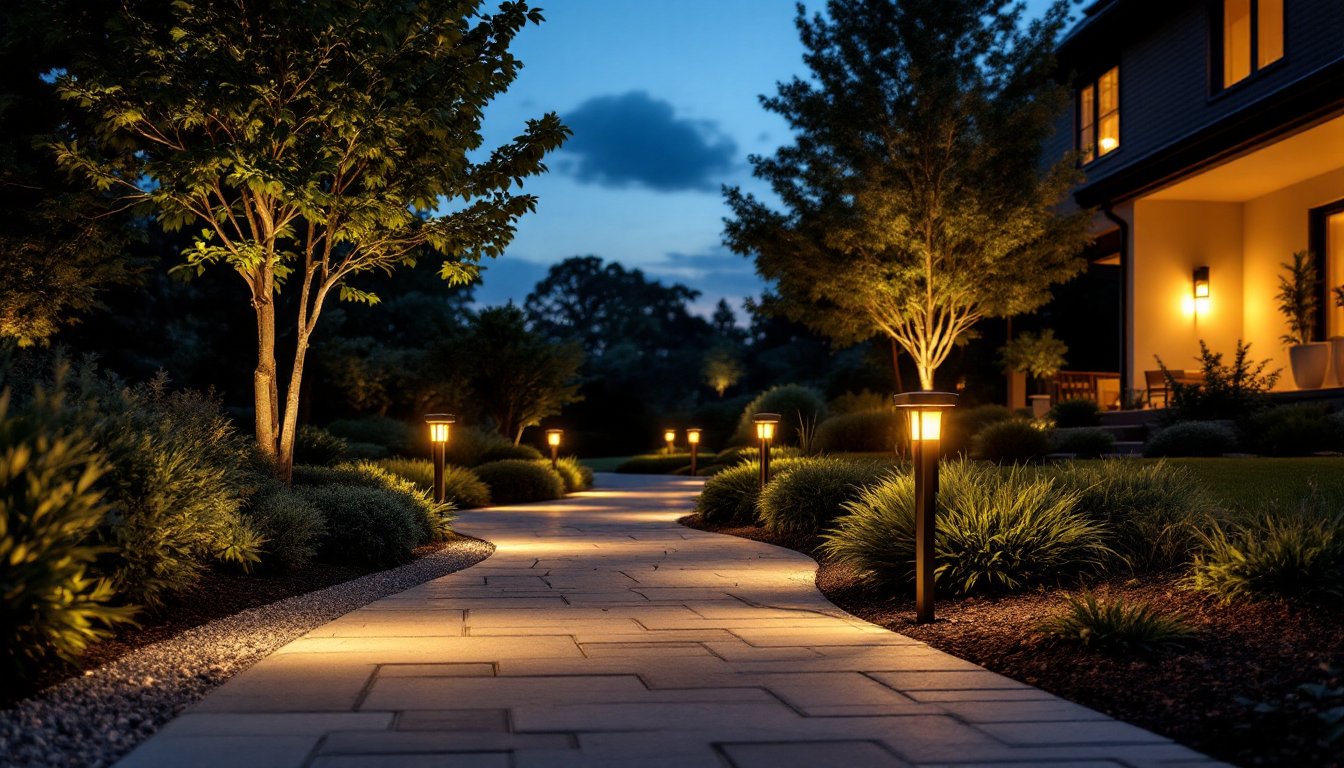
Spacing and placement matter more than brightness. Lights spaced 6 to 8 feet apart along a straight path create a continuous visual line without glare. At corners or transitions (from patio to steps, or lawn to garden), place a light just before the change so someone sees the shift in elevation or direction before stepping.
Avoid overlapping cones of light. If two fixtures create a bright spot where they overlap, either move them apart or reduce brightness. Similarly, avoid pointing lights directly at eye level along a path, it causes glare and defeats the purpose of guiding motion. Angled lights (30 to 45 degrees downward) illuminate the surface without discomfort.
Warm color temperature (2700K or lower) is typically preferred for residential paths. It creates a welcoming atmosphere, is less likely to attract insects, and mimics natural evening light. Cooler tones (5000K+) feel clinical and are better suited to utility areas, not leisure spaces.
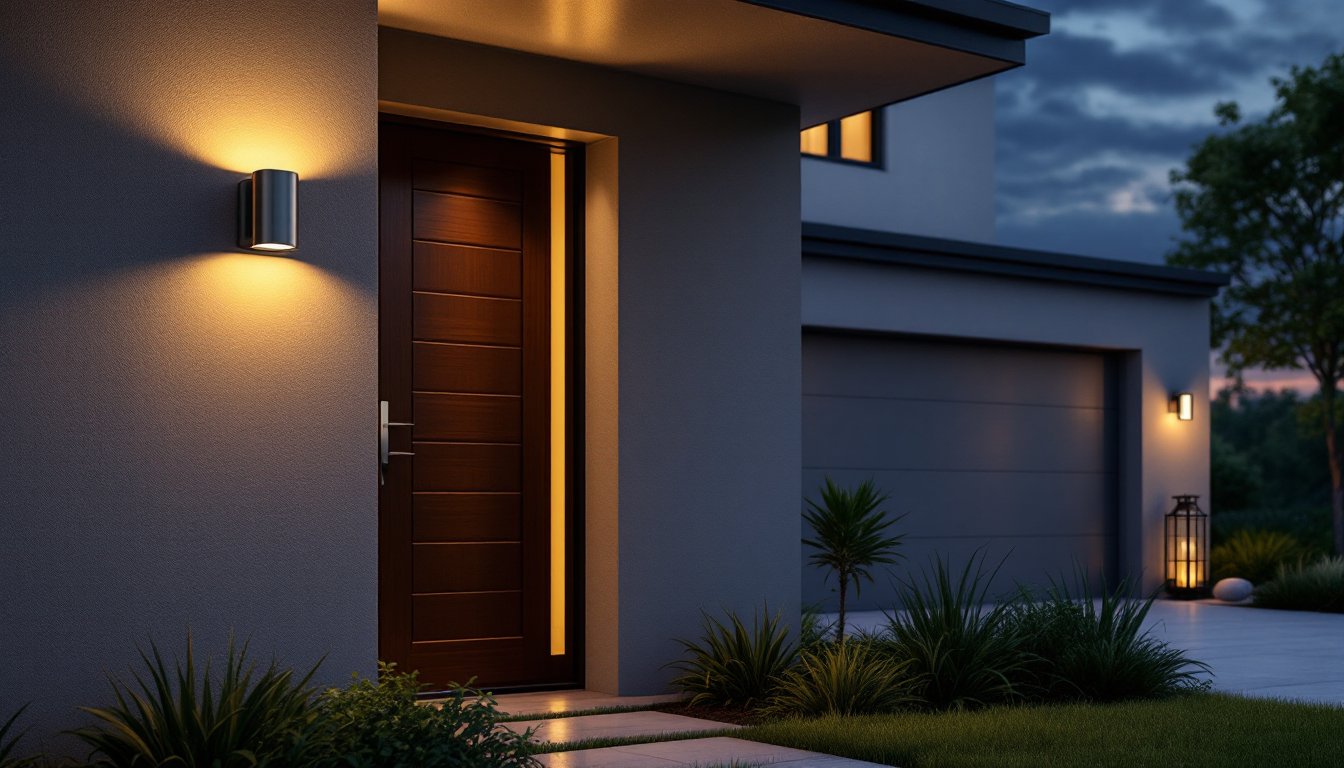
Layering is the professional touch. Path lights serve the base layer, defining the walkway itself. Secondary fixtures, uplighting on trees, wall sconces at entries, or accent lights on planting beds, add dimension and prevent the path from looking like an isolated runway. A homeowner aiming for restraint uses path lights only: someone with a bigger budget adds one or two accent layers.
Installation and Maintenance Tips
For solar lights, placement is installation. Choose a spot with unobstructed southern exposure, clear the area of mulch or leaves that might block the panel, and press the stake firmly into soil. Test it at dusk to confirm the light turns on. Clean the solar panel once or twice yearly (dust and pollen reduce efficiency by 10–20%). Replace batteries when light output drops noticeably, usually every 2 to 3 years.
For low-voltage systems, plan the layout before burying wire. Mark the transformer location (near an outdoor outlet, preferably GFCI-protected) and trace the path from there to each fixture. Burying wire under 4 to 6 inches of soil or mulch keeps it protected from mowers and weathering: wire buried deeper than 12 inches often gets damaged when digging or aerating the lawn.
Use only outdoor-rated, low-voltage cable (usually 12 or 10 gauge, depending on transformer amperage). Don’t splice connections in the field without waterproof junction boxes. Most systems use weatherproof connectors that push together, no crimping or soldering needed. Test the circuit before burying wire: connect it to the transformer, turn it on, and walk the path to confirm every light functions.
Winterization is region-dependent. In freezing climates, drain water from light fixtures before hard freezes to prevent ice damage. In mild climates, simply clear leaves and debris. Turn off the transformer in very early spring to clean fixtures and refresh mulch around buried wire.
When maintenance is needed, a broken fixture or failed transformer, mark the spot and order a replacement. Most modular low-voltage systems allow swapping components without affecting the rest. Solar lights simply get replaced individually as batteries fail.
Conclusion
Path lighting bridges function and aesthetics. Solar options suit open, well-lit yards and low budgets: low-voltage LED systems deliver reliability and design flexibility for homeowners willing to invest in trenching and wiring. Either way, thoughtful spacing, warm color temperature, and restraint in brightness elevate a yard from lit to well-designed. Start with a single run, observe how it feels, then expand or refine based on real-world performance.