
Deck lighting transforms an outdoor space from a daytime-only hangout into an evening retreat, but running electrical wiring to post lights and railings often means hiring an electrician, burying conduit, and facing monthly utility costs. Solar deck lighting sidesteps those headaches. Modern systems have shed their reputation for dim, flickering performance, today’s solar deck lights deliver reliable illumination, require zero wiring, and cost nothing to operate. Whether a homeowner is refreshing an existing deck or building from scratch, understanding which solar lights fit the job and how to install them correctly separates a weekend project from a frustrating failure.
Table of Contents
ToggleKey Takeaways
- Solar deck lighting eliminates expensive electrical installation costs (often exceeding $1,500), requires zero wiring, and generates no monthly operating expenses.
- Modern solar deck lights deliver 8–12 hours of runtime with LED brightness comparable to low-voltage systems, making them a reliable alternative to traditional deck lighting.
- For optimal performance, clean solar panels quarterly, ensure 6+ hours of daily direct sunlight, and plan on 4–6 post lights plus 10–15 railing lights for a typical 200–400 square foot deck.
- Proper installation preparation—including measuring posts, removing debris, pre-drilling holes, and testing lights before finalizing placement—prevents loose fixtures and performance issues.
- Battery replacement every 2–3 years (where accessible) and spring maintenance extend the lifespan of solar deck lighting systems and maintain reliable nighttime illumination.
- Choose IP65-rated or higher solar lights with aluminum or stainless-steel housings to withstand weather exposure, and verify whether units have replaceable batteries before purchase.
Why Solar Deck Lighting Is Worth the Investment
Solar deck lights eliminate the need for buried electrical lines, trenching permits, and licensed electrician fees, costs that can easily exceed $1,500 for a modest deck. Homeowners save on installation labor and avoid the complexity of outdoor electrical codes and junction boxes. Once installed, solar lights generate zero operating costs: the sun powers them, so there’s no additional draw on the home’s circuit panel or monthly electric bill.
Modern solar deck lights also offer flexible placement. Because they don’t require wiring runs or outlet proximity, a homeowner can position lights along railings, under steps, or at deck corners without planning routes through framing. If a light underperforms or a design preference shifts, removing or relocating a solar unit takes minutes, no drywall patches or rewiring required.
Performance has improved dramatically since the early 2000s. Today’s LED solar deck lights run 8–12 hours on a full charge during summer months and often include motion sensors or dusk-to-dawn auto-on features. Lithium-ion batteries hold their charge longer than older NiCd cells, and many units now provide brightness comparable to low-voltage deck lighting without the infrastructure.
Types of Solar Deck Lights to Transform Your Outdoor Space
Post Lights and Railing Lights
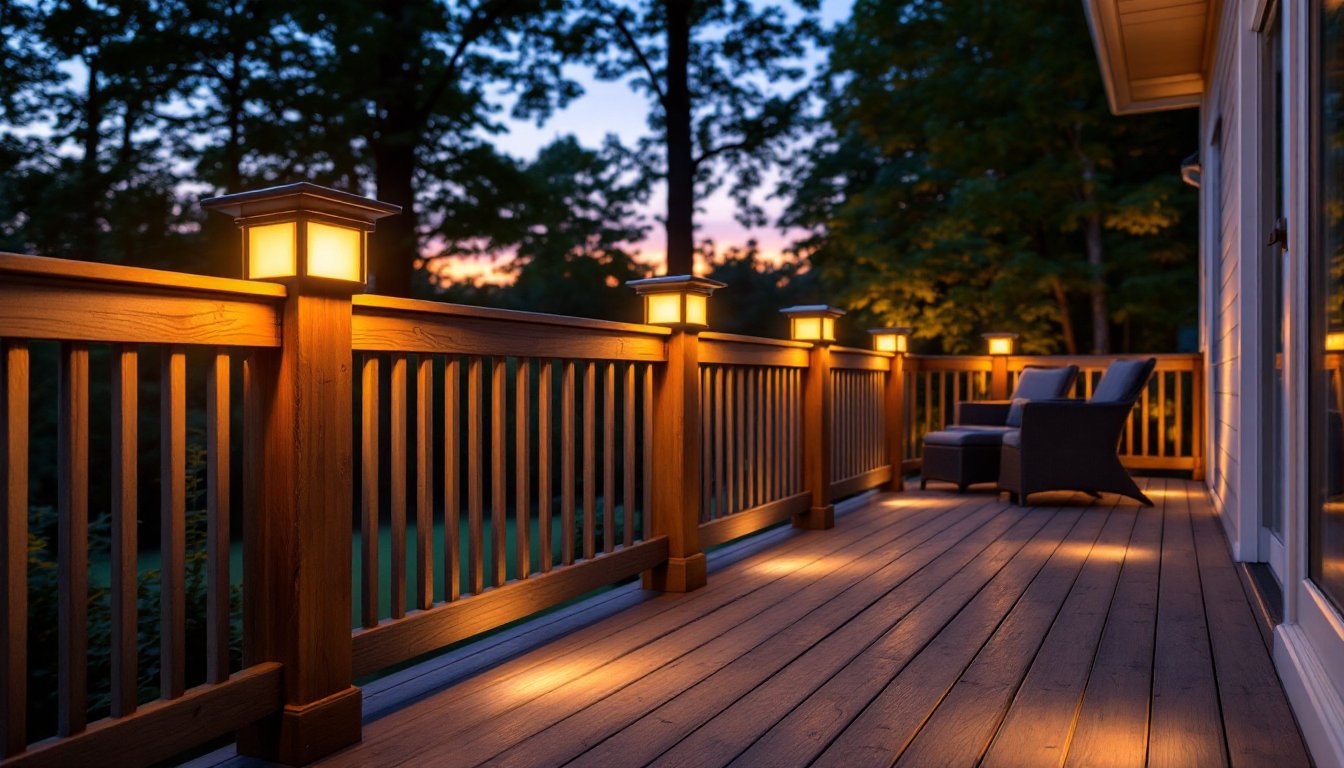
Post lights are the workhorse of deck lighting. These 4×4 post cap lights mount directly onto deck posts and provide ambient illumination across the entire deck surface. Most models use a single LED and draw power from a rechargeable lithium battery housed inside the plastic or metal cap. Brightness typically ranges from 100–300 lumens, enough to navigate safely and set a mood without creating harsh shadows.
Railing lights mount flat against the vertical board of deck railings or balusters. They’re more subtle than post lights, usually 2–3 inches wide, and serve dual purposes: aesthetics and safety illumination along the edge. A good railing light has a frosted lens or diffuser to spread light evenly rather than creating bright spots.
Durability matters here. Post and railing lights face weather on all sides, so look for IP65-rated or higher (dustproof and water-resistant to 1 meter depth). Aluminum or stainless-steel housings outperform plastic in regions with harsh winters or salt-air exposure. Check battery access: if a unit is sealed, replacing a dead battery after three years means tossing the whole light, which defeats the cost advantage.
Step Lights and In-Ground Options
Step lights mount into the face of deck steps or risers, typically 1–2 inches wide and 1–3 inches tall. Their main job is safety, illuminating the edge of each step so a guest won’t trip. Step lights are less bright than post lights (often 50–150 lumens) because they target a specific area rather than general deck lighting.
In-ground solar deck lights sit flush with or slightly above the deck surface and work well along the perimeter or between boards. They’re durable by design: the housing sits mostly underground, so it’s less exposed to extreme weather swings. In-ground units typically have lower brightness, 30–100 lumens, so they work better as accent lighting than primary illumination. A common mistake is assuming in-ground lights can substitute for post or railing lights: they’re complementary, not replacements.
Both step and in-ground types require planning during deck construction if possible. Retrofitting them into an existing deck means routing lights around existing fasteners and framing, sometimes creating gaps or weak spots. If the deck is already built, post and railing lights are faster and cleaner to add.
How to Choose and Install Solar Deck Lights
Material and brightness are the first choices. For a typical 200–400 square foot deck, plan on 4–6 post lights (at deck corners and mid-span) plus 10–15 railing lights for adequate ambient lighting. If the deck is larger or sits in a shaded area, add 20–30% more capacity. Lumens ratings tell the story: 150–200 lumens per post light and 50–100 per railing light is a solid baseline. For step lights on stairs with more than three treads, one light per two steps prevents dark gaps.
Battery life degrades over time. Most modern solar lights claim 3–5 years before a significant drop-off, but real-world performance varies with climate. In cloudy regions or decks under tree shade, expect 6–8 hours of runtime instead of the advertised 12. When comparing models, note whether the manufacturer lists lumens under actual overcast conditions, not ideal sunshine.
Installation is straightforward but prep matters. For post cap lights, measure the post diameter first, most caps fit 4×4 or 6×6 posts, and trying to force a 4×4 cap onto a tapered or weathered 6×6 creates gaps where water pools. Clean the post top with a bristle brush to remove mildew and debris: a damp surface prevents tight seating. If the top is severely weathered or uneven, use a belt sander or planer to level it, spend five minutes here and avoid loose lights three months later.
For railing lights, locate studs or balusters before drilling. Use a stud finder to avoid drilling into hidden fasteners. Mount lights at a consistent height, typically 4–5 feet above the deck surface for uniform appearance. Drill small pilot holes before inserting fasteners: this prevents splitting the railing board, especially in treated lumber or hardwoods. If mounting on composite decking, use corrosion-resistant stainless-steel fasteners and pre-drill to avoid compression cracks.
Step lights and in-ground units need clearance from debris. Brush out the mounting location and ensure water won’t pool around the light. If mounting in a deck board edge, use silicone caulk around the housing to seal gaps, not for looks, but to prevent water intrusion that shorts the battery contacts.
Test all lights before finalizing placement. On a sunny day, observe nighttime brightness by covering the solar panel briefly to trigger activation. A light that’s too dim can be relocated or swapped: waiting until dark to discover a missed spot wastes time.
Maximizing Performance and Longevity
Solar panel cleanliness directly affects charging. Dust, pollen, and bird droppings cut solar input significantly, sometimes by 30–50%. Wipe panels quarterly with a dry cloth: in heavy pollen seasons or near trees, clean monthly. A quick rinse with a garden hose works in a pinch, but a microfiber cloth and gentle motion prevent scratches on plastic lenses.
Placement in full sun matters more than homeowners expect. A post light receiving 6+ hours of direct daily sun will perform as rated. One in partial shade (under a pergola overhang or near a large tree) might deliver only 60% runtime. Map sun patterns across the deck during the season when the light will be used most, summer for entertaining, winter for holiday ambiance.
Battery replacement extends life significantly. Most post and railing lights use standard AA or AAA lithium batteries or proprietary rechargeable cells. Check whether your light uses replaceable batteries: if so, mark a calendar to swap them after 2–3 years before performance drops noticeably. If the unit is sealed with a non-replaceable battery, factor replacement cost into the initial purchase decision.
Winter storage isn’t always necessary, but in extreme climates (sustained below –15°F), remove lights or cover them to reduce cold-soaking damage to battery contacts. In mild climates, lights can stay in place year-round. Spring cleaning, opening access panels to clear any water intrusion or corrosion, prevents mid-season failures.
If brightness dims gradually, the issue is usually battery degradation, not a faulty LED. Upgrading to a light with a larger or faster-charging solar panel (typically 0.4–0.6 watts) or higher-capacity battery (3,000–4,000 mAh) gives a fresh start without replacing posts or railings.
Conclusion
Solar deck lighting delivers practical, cost-free illumination without the complexity and expense of electrical wiring. By choosing the right mix of post, railing, and accent lights, and by spending time on clean installation and routine maintenance, a homeowner gets reliable performance that lasts. Modern solar systems have earned their place alongside traditional deck lighting, not as a compromise, but as a smarter way to light the outdoor space.