
Bedroom lighting sets the tone for rest and relaxation, yet many people overlook ceiling options when planning their space. The right ceiling lighting serves dual purposes: it provides functional illumination for daily tasks and creates ambiance for unwinding after a long day. Unlike wall sconces or nightstands lamps, ceiling fixtures offer even light distribution without taking up floor or surface space. Homeowners tackling bedroom upgrades in 2026 have more options than ever, from sleek recessed lights to smart dimmers that adjust automatically. This guide walks through practical ceiling lighting solutions that work for different room sizes, budgets, and design preferences, with honest assessments of installation difficulty and real-world performance.
Table of Contents
ToggleKey Takeaways
- Bedroom ceiling lighting ideas range from recessed lights and pendant fixtures to smart dimming systems, each offering unique benefits for light distribution and room aesthetics.
- Recessed lights provide seamless, modern illumination and require proper IC-rated insulation to meet building codes, with 3–5 fixtures spaced 4–6 feet apart ideal for most bedrooms.
- Pendant lights, flush mounts, and semi-flush fixtures work across different ceiling heights and styles, with installation complexity depending on whether you’re using existing outlets or running new electrical circuits.
- Layer your ceiling lighting with recessed or flush-mount general lighting (50–75% brightness), bedside task lamps, and dimmable fixtures for ambiance (20–30% brightness) to create functional and relaxing spaces.
- Smart ceiling lights with adjustable color temperature (warm 2700K for relaxation, cool 5000K for alertness) improve sleep quality by mimicking natural light cycles and reducing blue light exposure.
- Track lighting offers flexible, adjustable illumination perfect for reading nooks and vanities, while dimmer switches and smart systems are essential for controlling ambiance and supporting your bedroom’s dual purpose of rest and daily function.
Recessed Lighting for a Clean, Modern Look
Recessed lights (also called downlights or can lights) sit flush with the ceiling, creating a seamless, uncluttered appearance. They work especially well in bedrooms with low ceilings or minimal décor, as they don’t interfere with headroom or visual clutter.
Installation depends on whether you’re working with new construction or retrofitting an existing ceiling. In new builds or renovation projects with open joist bays, running wiring and cutting drywall openings is straightforward. For retrofit installations in finished ceilings, you’ll need remodel cans (shallow fixtures that grip from below) rather than standard construction cans, which require clearance from above.
One critical consideration: recessed lights demand insulation-rated fixtures (marked IC-rated) if your ceiling sits below an attic or unconditioned space. Non-rated fixtures create a fire hazard and violate building codes. A typical bedroom needs 3–5 recessed fixtures depending on ceiling height and room size: spacing them 4–6 feet apart ensures even illumination without dark spots.
Choose trim rings and baffles carefully. Brushed nickel or matte black trims complement modern bedrooms, while white or clear options suit traditional spaces. Baffle trims reduce glare, important in a relaxation space. LED retrofit bulbs now last 25,000+ hours, making recessed lights cost-effective even though higher upfront fixture prices.
Working with existing drywall requires a drywall saw and careful drilling: hire an electrician if you’re uncomfortable running new circuits or cutting large openings.
Pendant Lights and Hanging Fixtures
Pendant lights hang from the ceiling on chains, cords, or rods, delivering focused light and visual interest. They’re ideal for bedrooms with higher ceilings (9 feet or more) and work well over a vanity, reading nook, or bedside for task lighting.
Key measurements matter: hang pendant lights 12–18 inches below the ceiling and 30–36 inches above furniture or task surfaces (like a vanity desk). This prevents glare while keeping fixtures proportional to the space. A pair of matching pendants flanking a bed or vanity creates balance and visual sophistication.
Installation typically involves removing an existing fixture, fishing wire through the ceiling, and connecting to an existing electrical box. If your bedroom lacks a ceiling fixture where you want one, adding a new outlet requires running wire through the attic or inside walls, a task best left to licensed electricians in most jurisdictions.
Material choices range from fabric shades (warm, soft light) to metal or glass (modern, crisp illumination). Frosted or opal glass diffuses harsh shadows, while clear glass suits minimal designs. Avoid bare bulbs in bedrooms unless you’re using warm-toned Edison-style bulbs: they create uncomfortably bright pools of light.
Dunn and Bradstreet data shows pendant fixtures have gained 34% in bedroom popularity since 2023, largely because they double as décor. Ensure chains and cords aren’t frayed or damaged before installation.
Flush and Semi-Flush Mount Ceilings
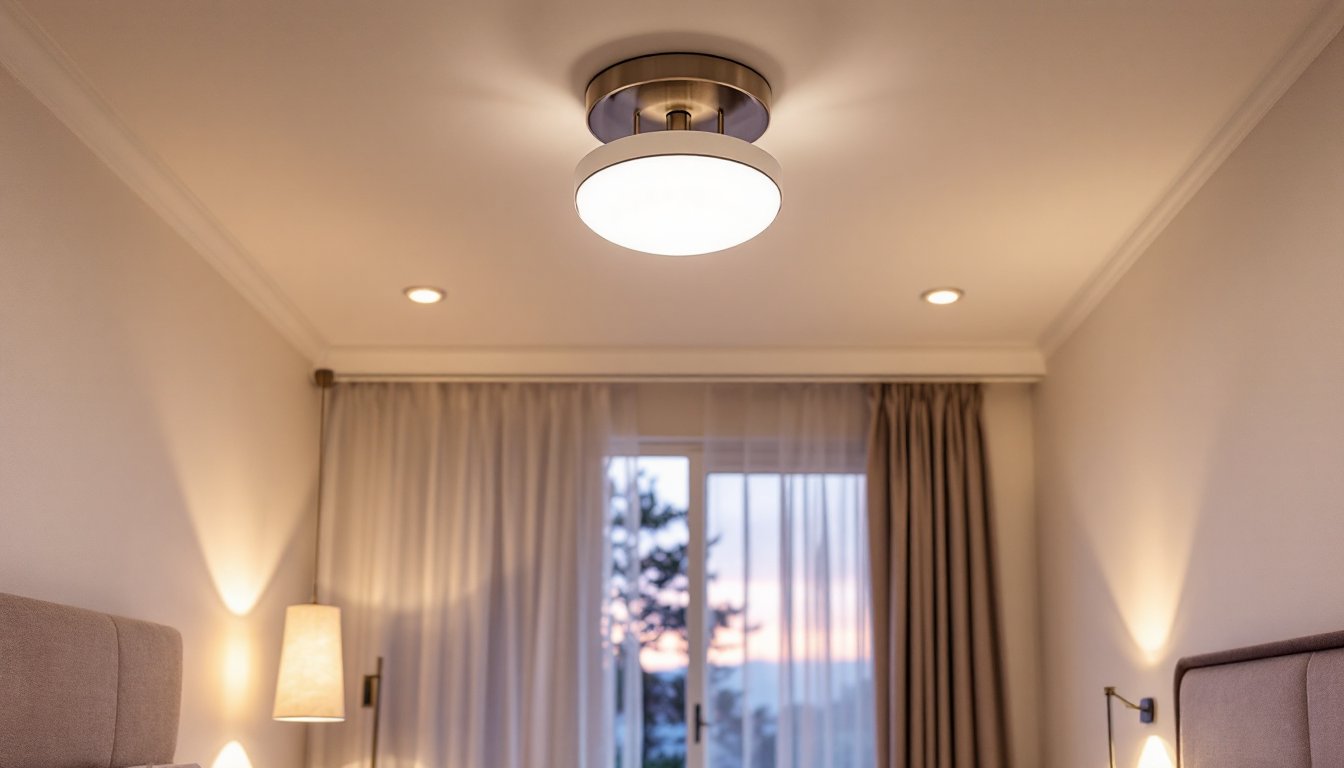
Flush mounts attach directly to the ceiling and sit nearly flush with it, making them perfect for standard ceiling heights (8–9 feet). Semi-flush models hang 4–8 inches below the ceiling, offering a middle ground between flush mounts and pendants.
These fixtures work across most bedroom styles: crystal or fabric shades suit traditional décor, while geometric or minimalist designs fit contemporary spaces. They distribute light more evenly than pendants, covering larger areas without shadows.
Installation is simpler than pendants: most flush mounts use a standard ceiling outlet, requiring only bracket attachment and wire connection. If an outlet doesn’t exist, you’ll need to run new wiring, again, typically requiring a licensed electrician. Check local building codes: some jurisdictions classify ceiling fixture installation as a permitted electrical task, while others allow homeowners to do it themselves.
One advantage: flush and semi-flush fixtures integrate with existing light switches without modification. If you want dimming capability, install a dimmer switch rated for your bulb type. LED dimmers aren’t universal: confirm compatibility before purchasing to avoid flickering or humming.
Size matters. Oversized fixtures dwarf small bedrooms: undersized ones look incomplete. A quick rule: the fixture’s total diameter (in inches) should equal one-twelfth of the room’s total square footage. A 120-square-foot bedroom suits a fixture roughly 10 inches in diameter.
Track Lighting for Flexible Illumination
Track lighting mounts a rail to the ceiling and features movable heads that swivel to direct light where needed. It’s perfect for reading nooks, vanities, or accent lighting in larger master bedrooms.
Monorail systems offer sleek single-rail designs: H-track and J-channel options allow more heads and complex layouts. Heads come as spotlights, floods, or softer downlights, giving you control over beam spread and intensity.
Installation mirrors recessed lighting: you’ll cut into drywall, run wiring, and secure the track to ceiling joists or existing outlets. Most DIYers manage single-track runs, but complex layouts with multiple branches warrant professional help. Ensure the track connects to a properly grounded electrical box: inadequate grounding violates NEC (National Electrical Code) standards and creates shock hazards.
Track lights excel in bedrooms where you shift furniture or want flexible task lighting. Swivel heads reach reading chairs, bed corners, or artwork without rewiring. LED track heads produce minimal heat, important in enclosed spaces, and fit most standard tracks with adapter clips.
One drawback: track systems are more visible than recessed lights. Sleek matte black or brushed nickel tracks read modern: brass or bronze suit transitional spaces. Poor track placement looks like a commercial office, so design the layout before installation.
Smart Lighting and Dimming Options
Smart ceiling lights connect to WiFi or Bluetooth, letting you adjust brightness and color temperature from a phone, voice command, or scheduled routines. In bedrooms, this means dimming lights automatically 30 minutes before bedtime or adjusting color temperature to reduce blue light exposure.
Warm light (2700K color temperature) promotes melatonin production: cool light (5000K+) energizes focus. Many smart systems let you shift from 5000K in the morning (for alertness) to 2700K by evening (for relaxation). This mimics natural light cycles and improves sleep quality.
Smart bulbs or fixtures range from affordable retrofit options ($20–50 per bulb) to pricier integrated systems. Retrofit bulbs screw into standard sockets, but dimming requires a compatible circuit. Integrated smart fixtures (recessed, flush, or pendant styles with WiFi built-in) cost more upfront but offer seamless control and no compatibility issues.
Compatibility matters: ensure your smart system works with your home’s hub. Philips Hue, Wyze, and Lutron are popular, but they’re not interchangeable. Check app reviews for stability: a light that disconnects nightly ruins functionality.
Install traditional dimmers alongside smart options if you prefer manual control. This adds cost but preserves redundancy: if the WiFi fails, a switch still works. Most smart fixtures include overrides, but manual dimmers feel safer for many homeowners. Occupancy sensors (motion-activated lights) suit bedrooms less than living spaces, though some prefer low-level nighttime illumination tied to motion.
Creating the Right Ambiance With Ceiling Lights
Functional light and ambiance require layering. A single ceiling fixture, no matter how bright, creates harsh shadows without supplemental task or accent lighting. Pair recessed or flush-mount ceiling lights with bedside lamps, wall sconces, or strip lighting behind a headboard.
Layering approach: use recessed or semi-flush lights for general illumination (50–75% brightness during evening), bedside lamps for reading (adjustable task light), and dimmable ceiling lights for mood (dimmed to 20–30% for relaxation). This flexibility costs more initially but transforms the room’s functionality.
Color temperature consistency matters. Don’t mix 2700K and 5000K bulbs in the same room: the mismatch looks jarring. Choose a temperature, warm (2700K) suits relaxation: neutral (3000–4000K) balances task and comfort. Smart lights simplify this: one app adjusts all fixtures uniformly.
Placement affects ambiance. Centered ceiling lights feel traditional: offset or clustered fixtures (like multiple pendants) read modern and create visual interest. Avoid placing lights directly above the bed: the downward beam creates unflattering shadows and sleep disruption if they’re bright.
Dimmer switches are non-negotiable for ambiance control. Standard rheostats work with incandescent and halogen: electronic or trailing-edge dimmers suit LEDs. Confirm your bulbs are dimmable before installation to avoid flickering. Modern smart dimmers start at $30–60 and provide both manual and app control, offering flexibility without complexity.
Conclusion
Bedroom ceiling lighting balances function and comfort in a room where both matter equally. Recessed lights offer clean aesthetics, pendants add character, and smart systems provide adaptive control. The right choice depends on ceiling height, room size, existing layout, and your willingness to run new electrical circuits. Start with your budget and ceiling limitations, then prioritize ambiance features like dimmers or color-adjustable bulbs. Most installations are achievable for confident DIYers, but electrical work requiring new circuits belongs with licensed professionals. Thoughtful ceiling lighting transforms a bedroom from a dark, one-dimensional space into a flexible environment that supports both rest and daily rituals.