
Dusk to dawn outdoor wall lighting automatically illuminates when darkness falls and shuts off at sunrise, no timers, no manual switching, no guesswork. These fixtures use built-in photocells or smart sensors to detect ambient light levels, making them a practical choice for homeowners balancing security with energy savings. Whether protecting an entryway, lighting a garage, or adding subtle ambiance to a backyard gathering space, dusk to dawn fixtures deliver convenience and reliability. This guide walks through selection, installation, and maintenance so you can add this layer of safety and usability to your home’s exterior.
Table of Contents
ToggleKey Takeaways
- Dusk to dawn outdoor wall lighting automatically activates at sunset and deactivates at sunrise using built-in photocells, eliminating manual switching and timers.
- LED dusk to dawn fixtures consume 80–90% less electricity than incandescent models and can save homeowners $50–150 per fixture annually.
- Proper placement is essential—mount entry lights 6–8 feet high and security lights 10–15 feet high, while positioning photocells away from nearby light sources to ensure accurate activation.
- Hardwired installation requires checking local building codes and permits; use outdoor-rated wiring (Type UF-B) and weatherproof connections to ensure safety and compliance.
- Minimal maintenance—cleaning the photocell lens twice yearly and inspecting weatherproof seals annually—keeps dusk to dawn fixtures operating reliably for 10–20 years.
What Is Dusk To Dawn Outdoor Wall Lighting?
Dusk to dawn outdoor wall lighting consists of wall-mounted fixtures equipped with photosensitive sensors (usually photocells) that detect changes in natural light. When ambient light drops below a preset threshold, typically around dusk, the photocell triggers the fixture on. As sunrise approaches and light levels increase, the sensor automatically switches the fixture off. No wiring to timers, no smart home app required.
These fixtures mount directly to exterior wall surfaces and come in LED, halogen, or traditional incandescent options, though LED dominates the market for lifespan and energy efficiency. A standard dusk to dawn wall light draws between 10–100 watts depending on type and brightness. The photocell itself uses minimal power and requires no batteries in hardwired versions, it simply rides the same electrical circuit as the bulb.
Common mounting styles include sconces (decorative flanking fixtures), flood lights (bright, wide-throw for security), and lantern-style units (period aesthetics for traditional homes). The photocell is either integral to the fixture or wired separately into the circuit.
Key Benefits of Automated Outdoor Lighting
The main appeal of dusk to dawn fixtures is hands-off automation. Once installed, they operate without user intervention, eliminating the forgotten porch light or the trip outside to flip a switch at dusk. Homeowners enjoy reliable security lighting every night without thinking about it.
Energy savings come from the automation itself: fixtures run only during darkness, not during daylight hours. LED dusk to dawn units consume 80–90% less electricity than incandescent equivalents, and many photocells have adjustable sensitivity settings, allowing you to fine-tune when the light activates based on your local sunrise/sunset schedule. Over a year, a single LED dusk to dawn fixture might cost $15–25 in electricity versus $100+ for an always-on incandescent model.
Security benefits are tangible. A consistently lit entryway, driveway, or side yard deters opportunistic intruders and helps residents and visitors navigate safely after dark. Motion sensors add a layer, but dusk to dawn fixtures provide ambient coverage without the false-alarm fatigue. Coupled with landscape lighting and interior visibility, they’re a practical deterrent.
Ambiance also matters. Soft sconce lighting above a patio door or warm-toned flood lights framing a deck create inviting outdoor spaces when evening entertaining happens. Unlike harsh security floods, decorative dusk to dawn sconces set a welcoming tone.
Choosing the Right Fixtures for Your Home
Start by defining the job: Are you prioritizing security (bright, wide throw, higher wattage) or ambiance (warm color temperature, directional sconce)? A driveway entrance calls for a flood light or motion-sensor flood with 50–100 watts and a wide beam angle (100–120°). A decorative porch sconce might be 10–20 watts with a narrower, downward-directed beam and a warm 2700K color temperature.
Consider your home’s exterior style. Modern homes suit clean-lined fixtures with angular aluminum or steel. Traditional homes pair well with bronze or black lantern-style sconces. Craftsman homes benefit from bronze or copper finishes with glass panels. A fixture that clashes visually will nag you every time you glance out a window.
Check the photocell sensitivity and adjustability. Some photocells activate only when light drops below 10 lux (very dark), while others trigger around 20–30 lux. Adjustable models let you avoid false dawn twilight activations in spring and fall. If you live in a brightly lit urban area, a fixture with narrower sensor range prevents daytime flicker.
Voltage matters. Most residential outdoor lighting runs on standard 120V household current, which simplifies installation. Low-voltage (12V) systems exist but require a transformer and are usually reserved for landscape accent lighting, not wall fixtures. Stick with 120V for simplicity unless you’re retrofitting into an existing low-voltage landscape system.
Fixture Styles and Designs
Flood lights deliver maximum brightness over a wide area, ideal for driveways, side yards, and security zones. Standard flood fixtures are cylindrical or rectangular, mount on a bracket, and aim adjustably. Output ranges from 20–150 watts (LED versions can go 50–100 lumens per watt).
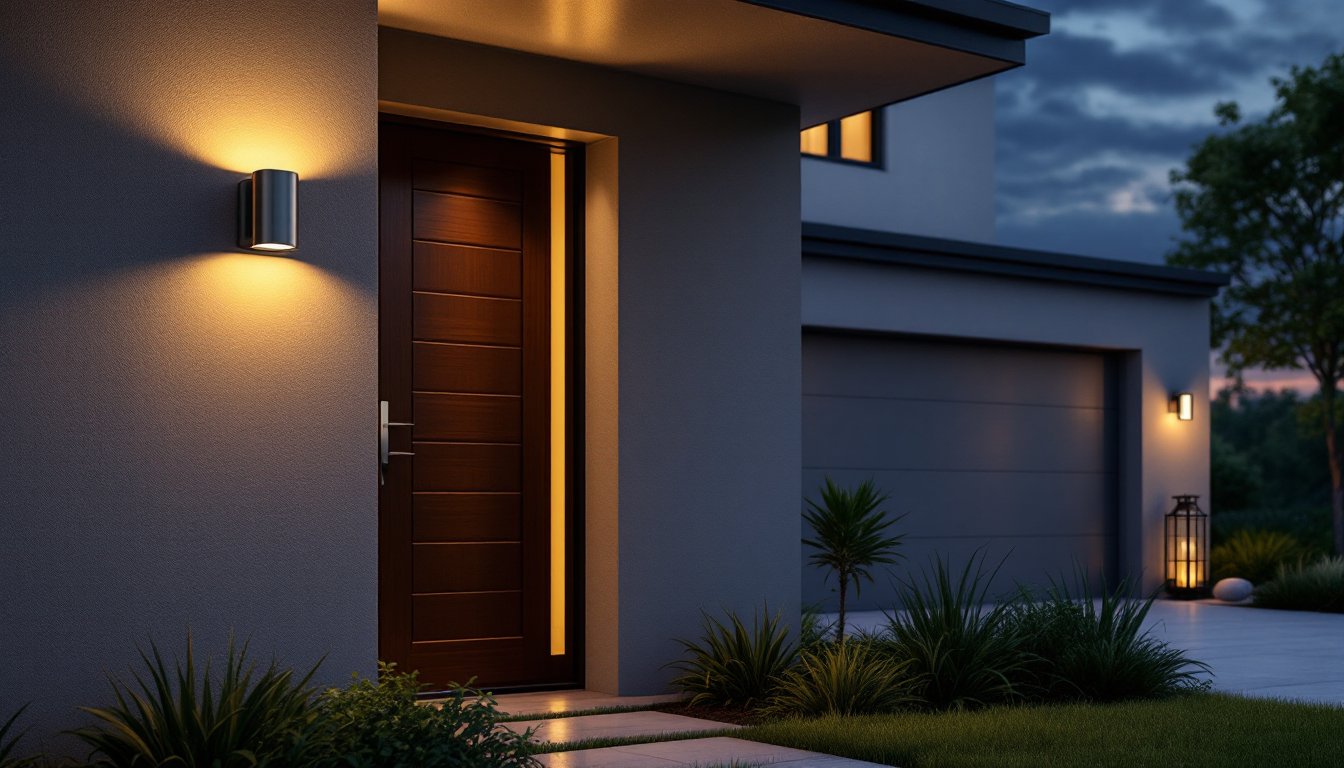
Sconces flank doors and windows for aesthetic balance and focused, downward-directed light. Sconces come in countless designs: modern cylinders, traditional lanterns, Tuscan-inspired, farmhouse. Brightness is typically 15–50 watts LED or 40–100 watts halogen, sufficient for pathway and entrance illumination without overwhelming glare.
Lantern-style fixtures suit period homes and blend security with curb appeal. They mount on posts, pillars, or walls and often feature glass panels and decorative finishes. These are dusk to dawn-friendly, though premium quality models cost more upfront.
Garage-mounted lights often serve dual duty: security and task lighting for evening projects. A 50–75 watt flood or rectangular fixture mounted at 8–10 feet above the garage door provides sufficient spread.
Installation and Placement Tips
Before picking up tools, check local building codes and electrical permits. Many jurisdictions require a permit for outdoor circuits, especially if you’re running a new circuit from the breaker panel. A rough rule: if the fixture ties into an existing exterior outlet or switch loop, a permit is almost always required. Call your local building department, a $50 permit now beats a costly citation or insurance headache later.
For placement, think about what you’re lighting. Entry doors and porches benefit from fixtures 6–8 feet above the ground, mounted to either side of the door or centered above it. Aim for 50–100 foot-candles (a foot-candle is one lumen per square foot) at ground level. Driveways and side yards need brighter fixtures mounted 10–15 feet high or on corner posts: these typically run 100–200 foot-candles for safe visibility. Deck or patio edges use softer accent lighting, 20–50 foot-candles, to define spaces without harsh glare.
Photocell placement is critical. Position the sensor to see true sky and avoid direct light from nearby streetlights, porch lights, or even interior lighting bleeding through windows. If the photocell “sees” nearby light sources, it may not activate at dusk. Mount the fixture so the photocell faces north or away from other light sources when possible.
Wiring considerations: Hardwired fixtures connect to a dedicated breaker or to an existing outdoor circuit rated for the load. Use outdoor-rated wire (Type UF-B, rated for direct burial if run underground) and weatherproof boxes and connectors. Wire gauge depends on distance and amperage, typically 14 AWG for 15-amp circuits up to 100 feet, 12 AWG for longer runs. If running new circuits or uncertain about existing capacity, hire a licensed electrician. Improper wiring risks shock, fire, and code violations.
Installation itself involves basic carpentry: mark the mounting height, locate studs or use appropriate wall anchors if mounting between studs, drill mounting holes, and secure the fixture bracket with corrosion-resistant hardware. Caulk around the base to prevent water intrusion. Connect the photocell wires (usually two leads) to the hot and neutral supply line per the fixture’s diagram, typically inside a weatherproof junction box. Seal all connections with appropriate rated wire nuts and silicone caulk.
Maintenance and Energy Efficiency
Dusk to dawn fixtures require minimal upkeep. Clean the photocell lens twice yearly (spring and fall) with a soft, dry cloth to remove dust and pollen buildup, which can cloud the sensor and delay activation. If the fixture acts sluggish or activates at odd times, a dirty lens is often the culprit.
Inspect the weatherproof seals annually. Caulking around the fixture base can crack over time, allowing water into the electrical housing. Re-caulk with exterior-grade silicone if gaps appear. Check that wire nuts and connections inside junction boxes remain tight and dry: corrosion in wet conditions can cause circuit failures.
LED bulbs in dusk to dawn fixtures last 15,000–50,000 hours (roughly 10–20 years of typical use). When replacing, match the wattage and color temperature of the original to maintain intended light output and appearance. Don’t assume all LED bulbs fit all fixtures: some photocells are incompatible with certain LED types due to their minimal draw. Check the fixture manual or consult the retailer.
Energy efficiency gains compound over time. Switching to a dusk to dawn LED fixture from an always-on incandescent reduces annual energy use by 80–90%, translating to $50–150 per fixture per year depending on local electricity rates. A typical home with three outdoor wall lights could save $150–450 annually. Smart controls like dawn-sensor overrides or remote app-based scheduling (in smart-enabled models) add flexibility and can optimize run times seasonally.
Conclusion
Dusk to dawn outdoor wall lighting delivers reliable security, convenience, and energy savings with minimal fuss. By choosing the right fixture style for your home’s aesthetic and layout, installing it properly (with appropriate permits and wire sizing), and maintaining the photocell and seals, you’ll enjoy years of trouble-free operation. Whether you’re reinforcing home security or creating an inviting evening ambiance, dusk to dawn automation removes one more task from your to-do list, and that’s what practical home improvement is all about.